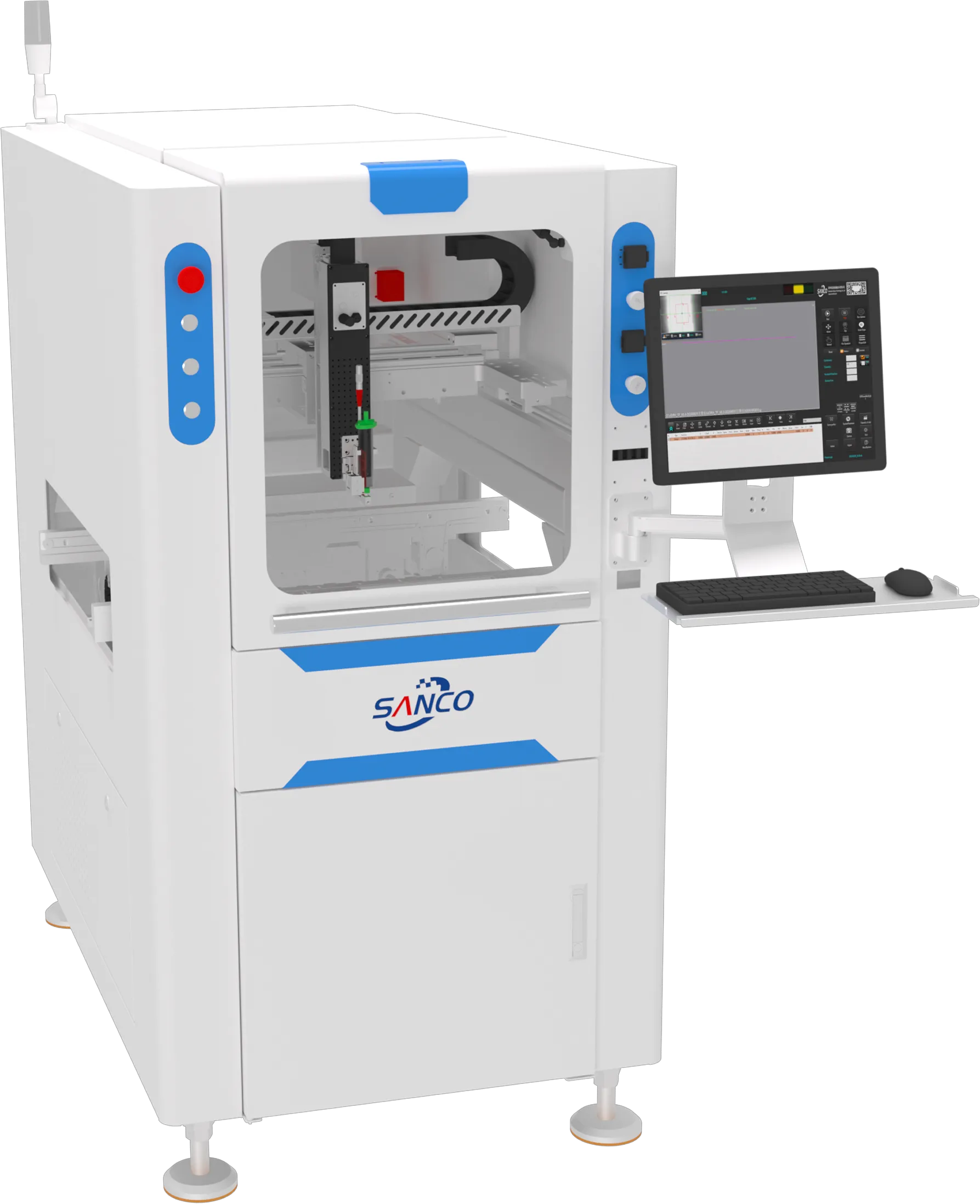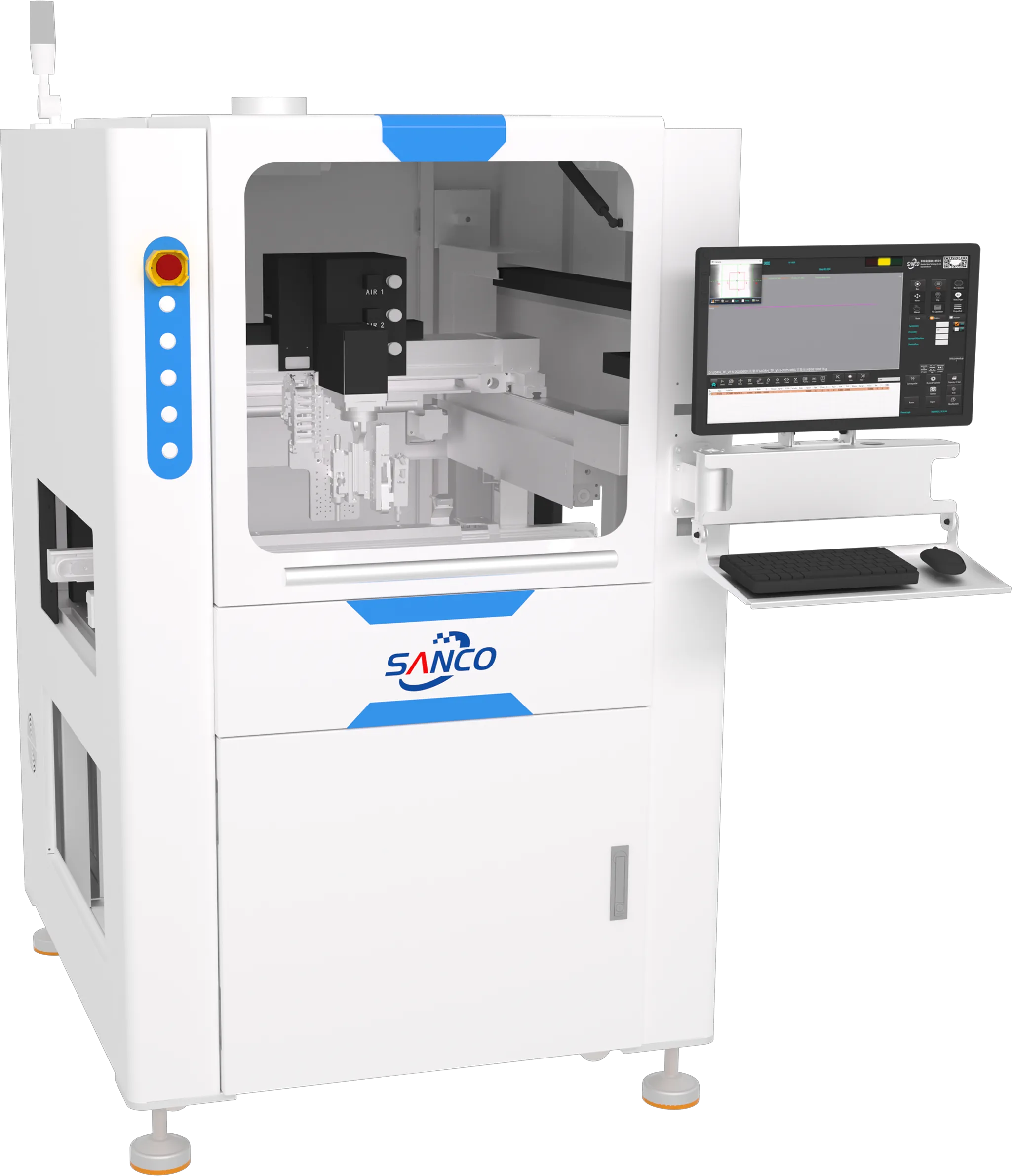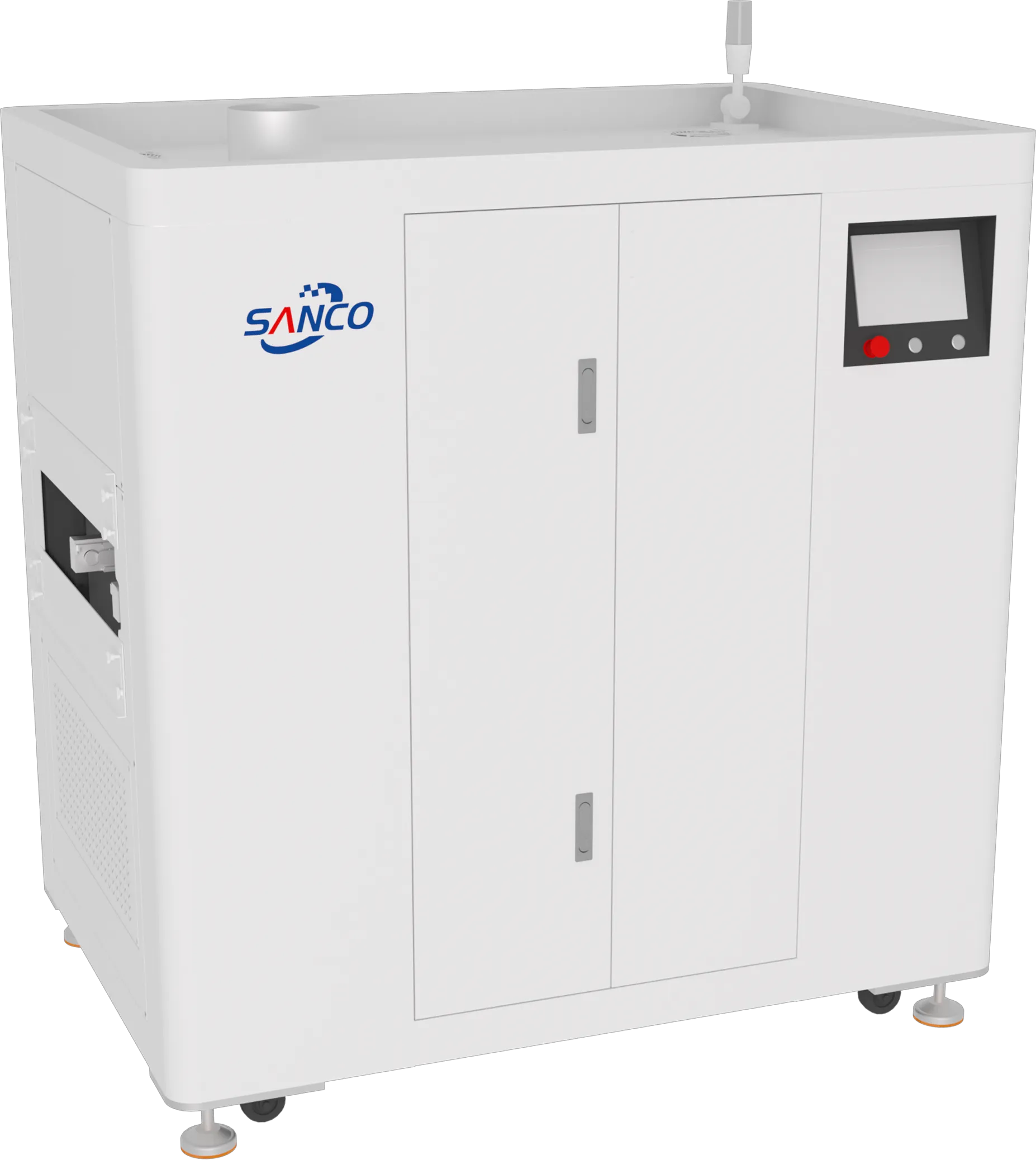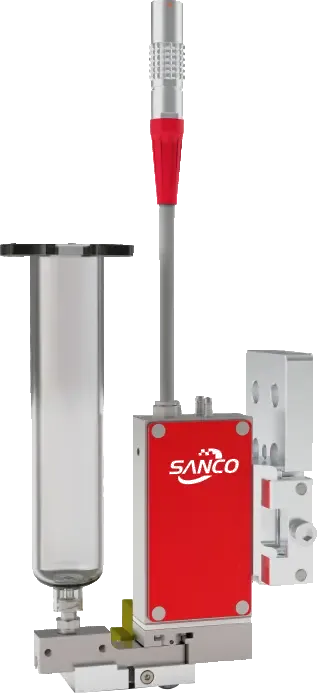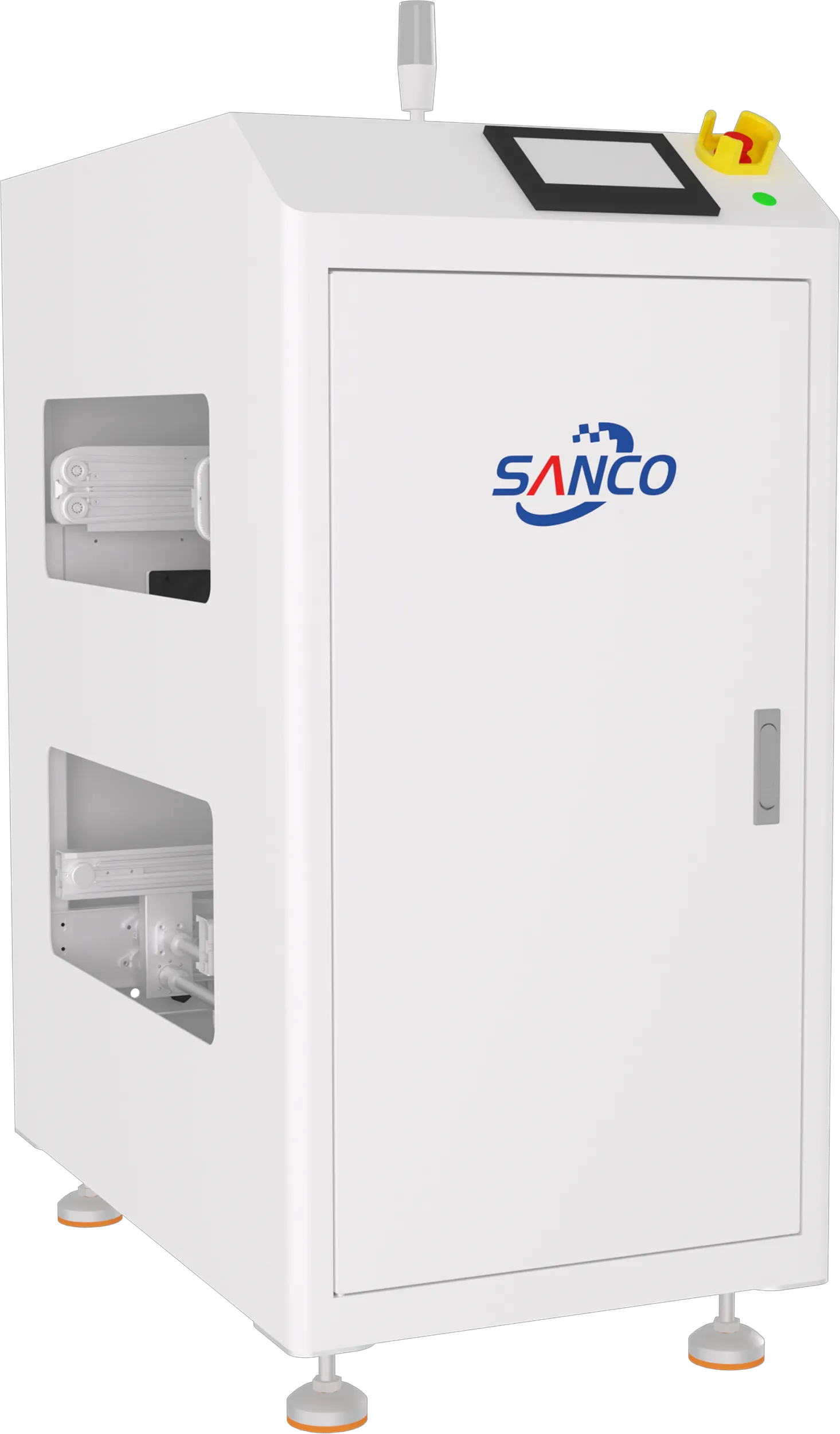
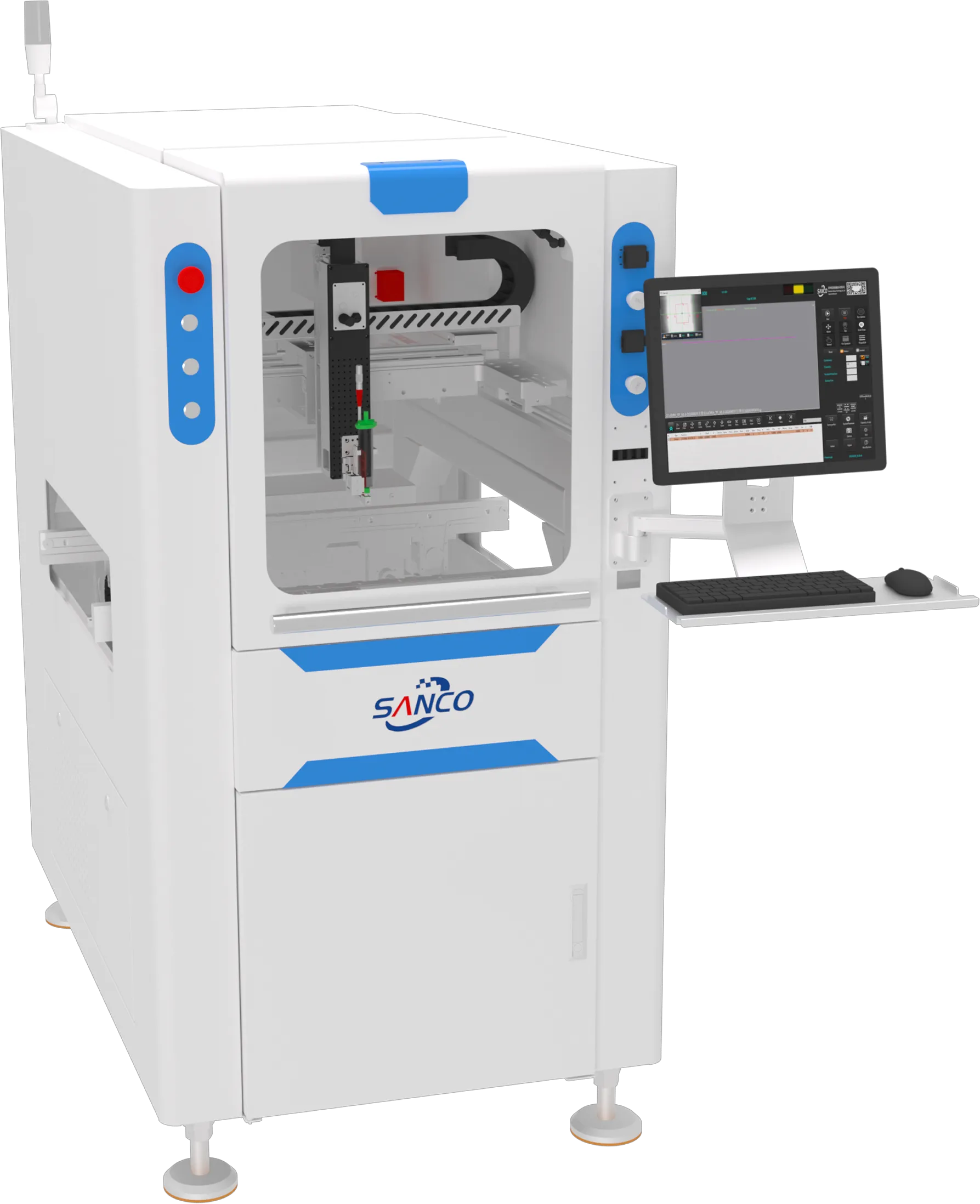
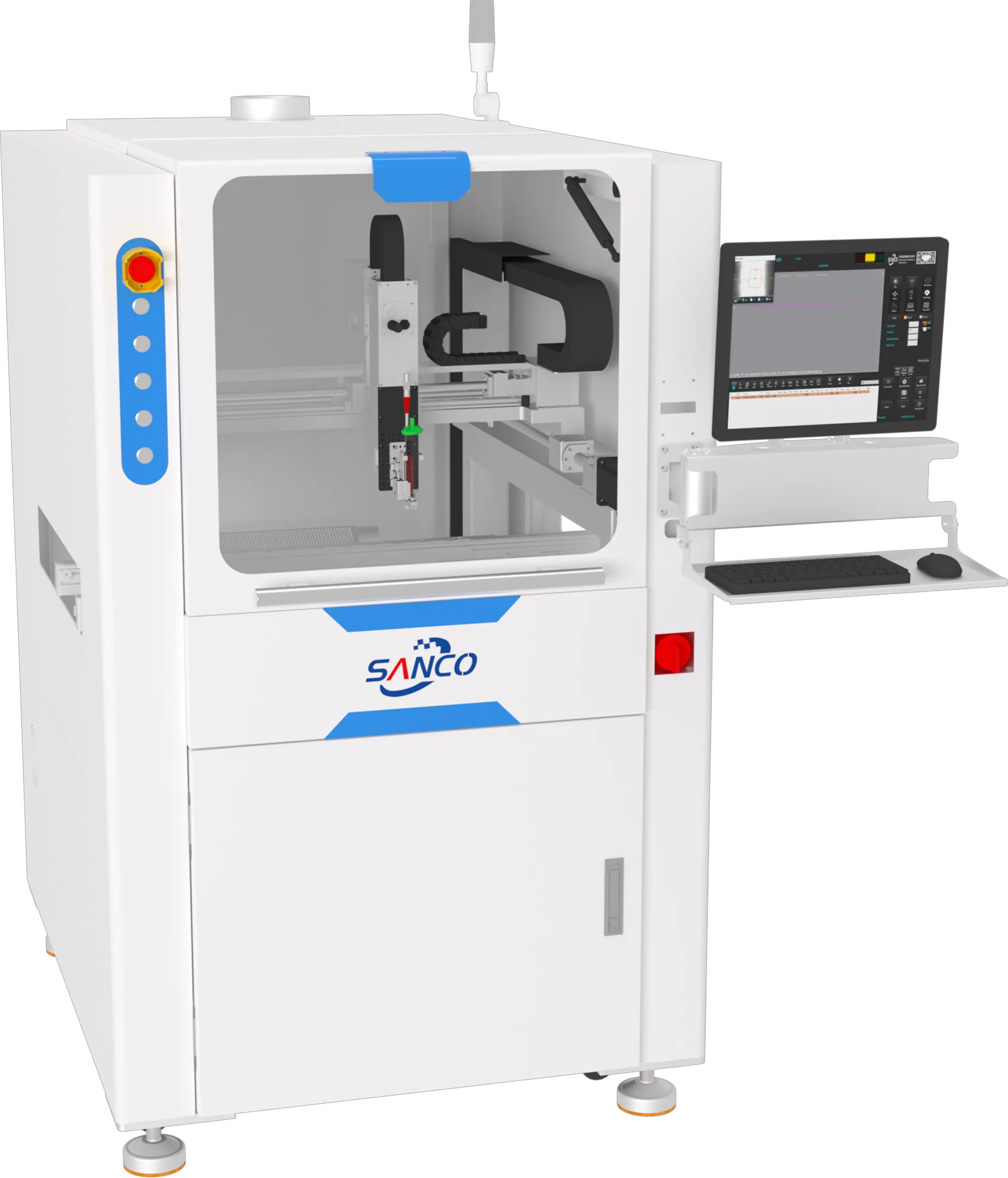
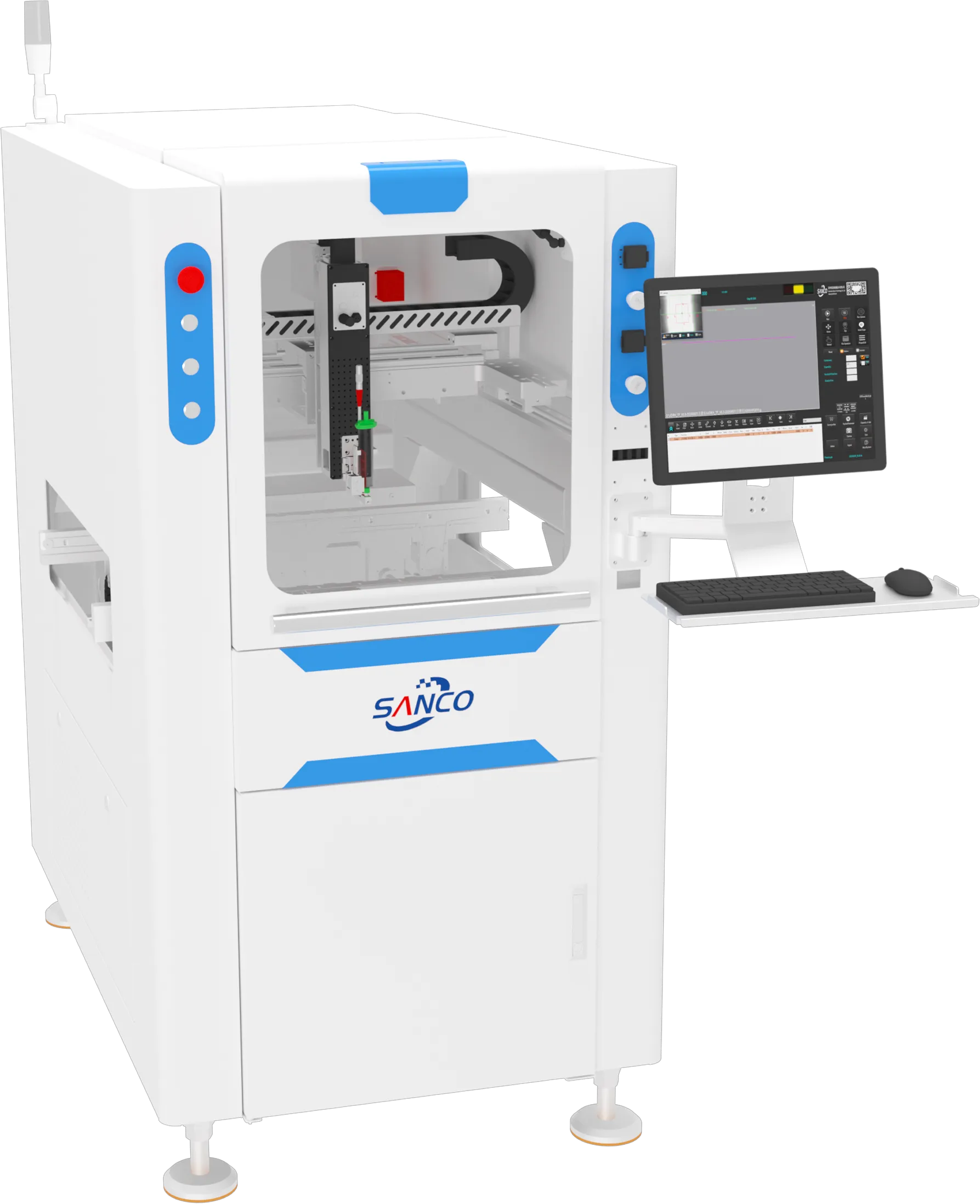
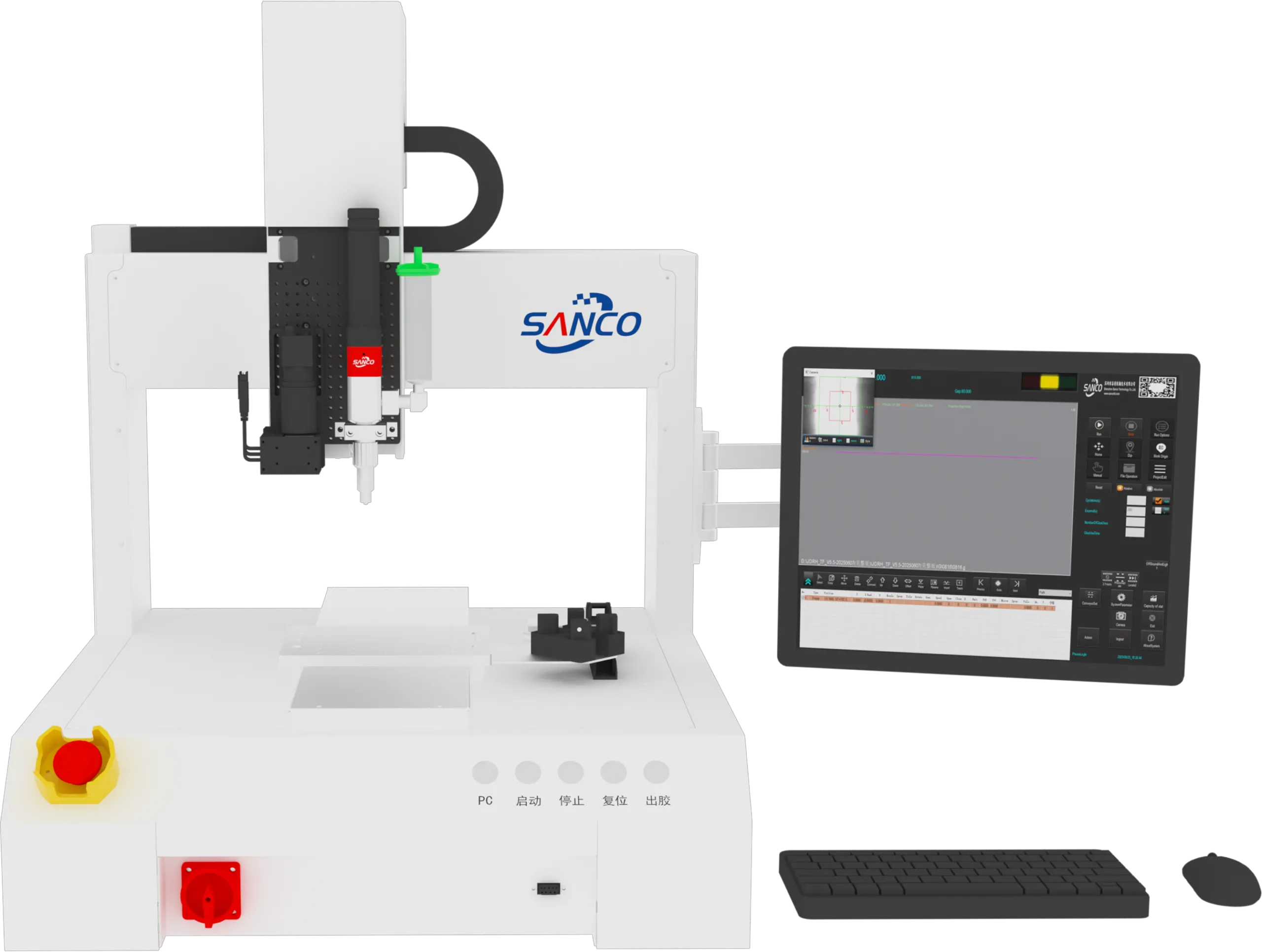
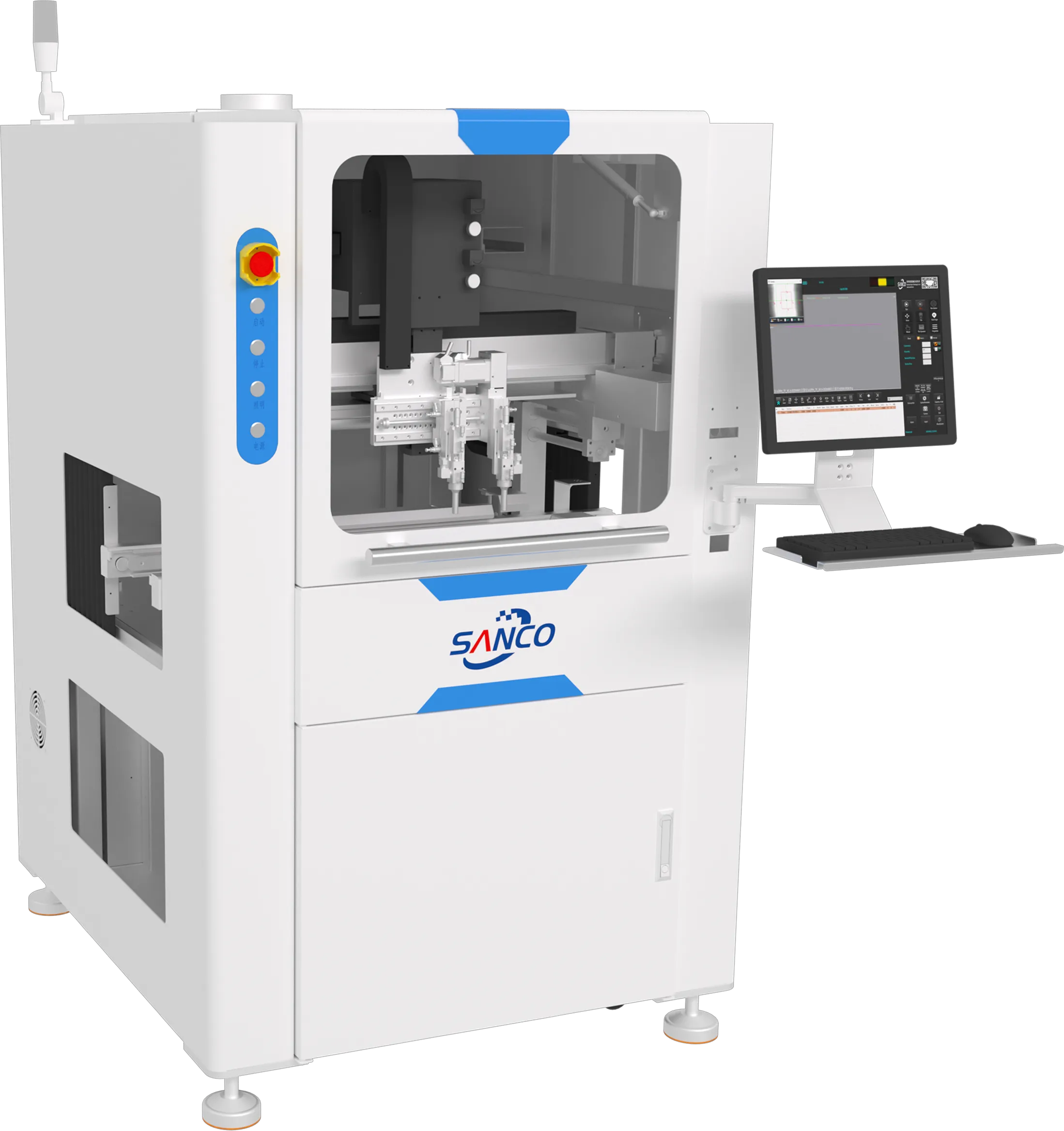
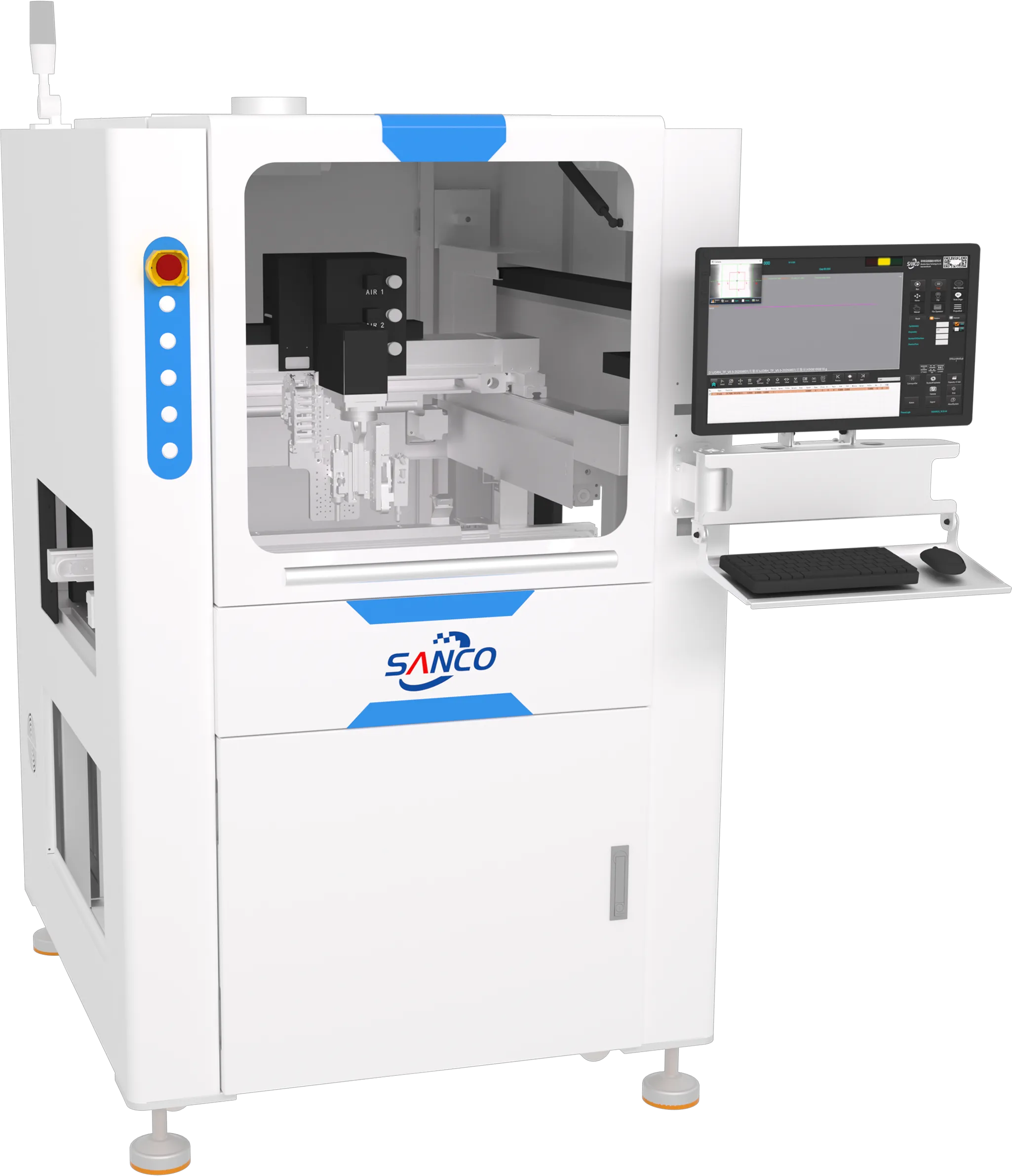
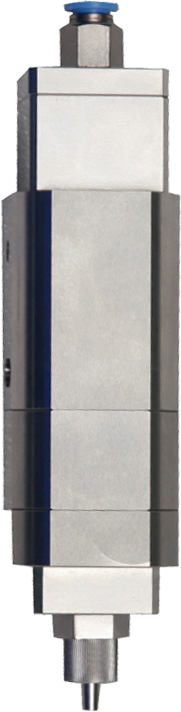
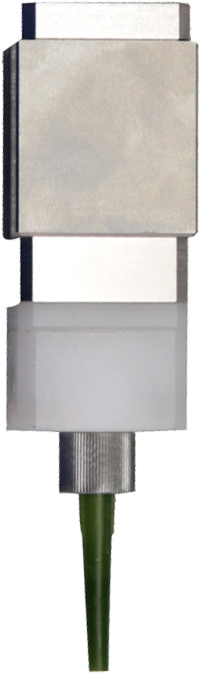
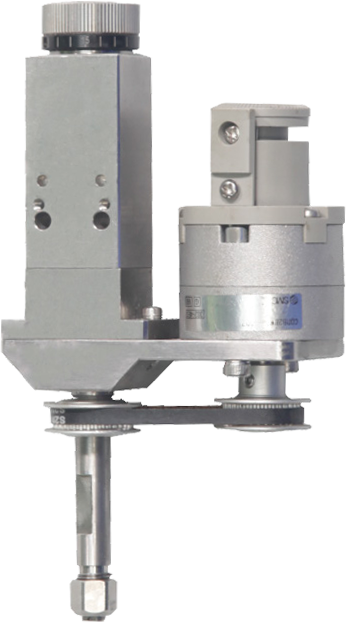

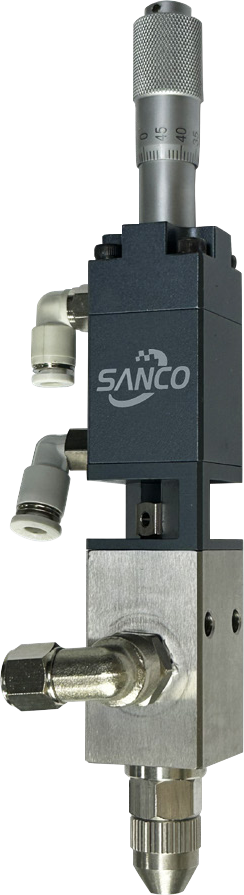
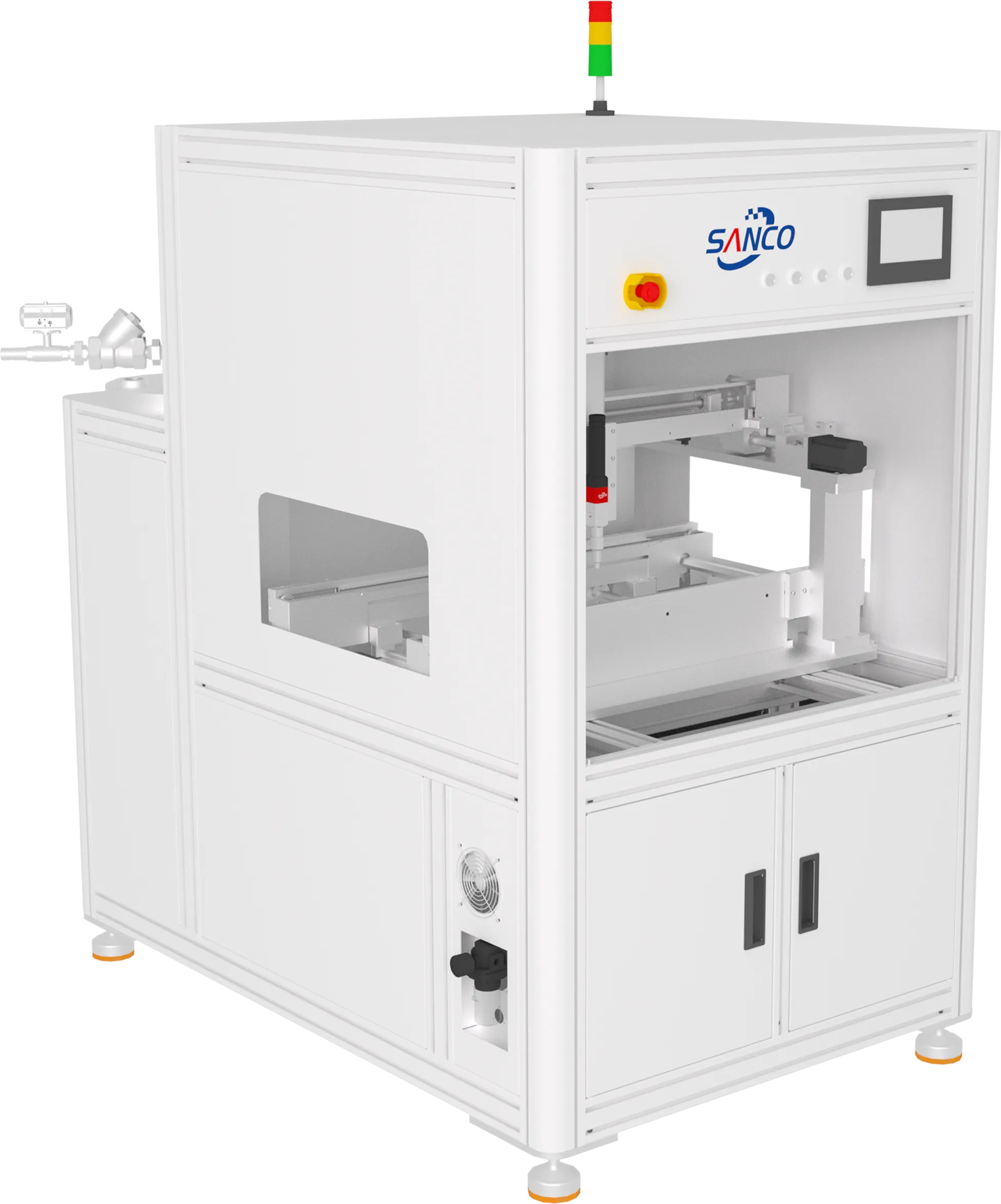
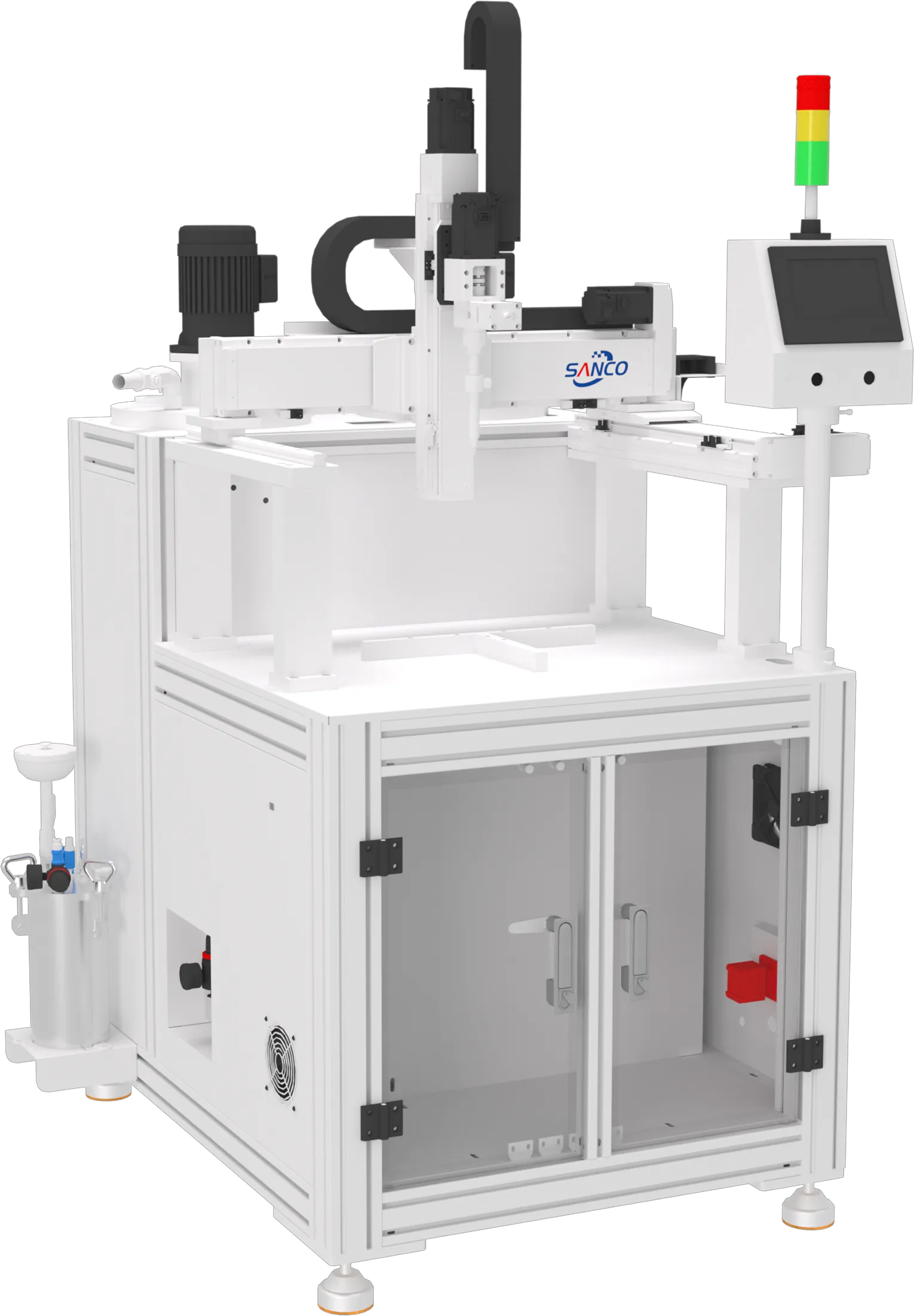
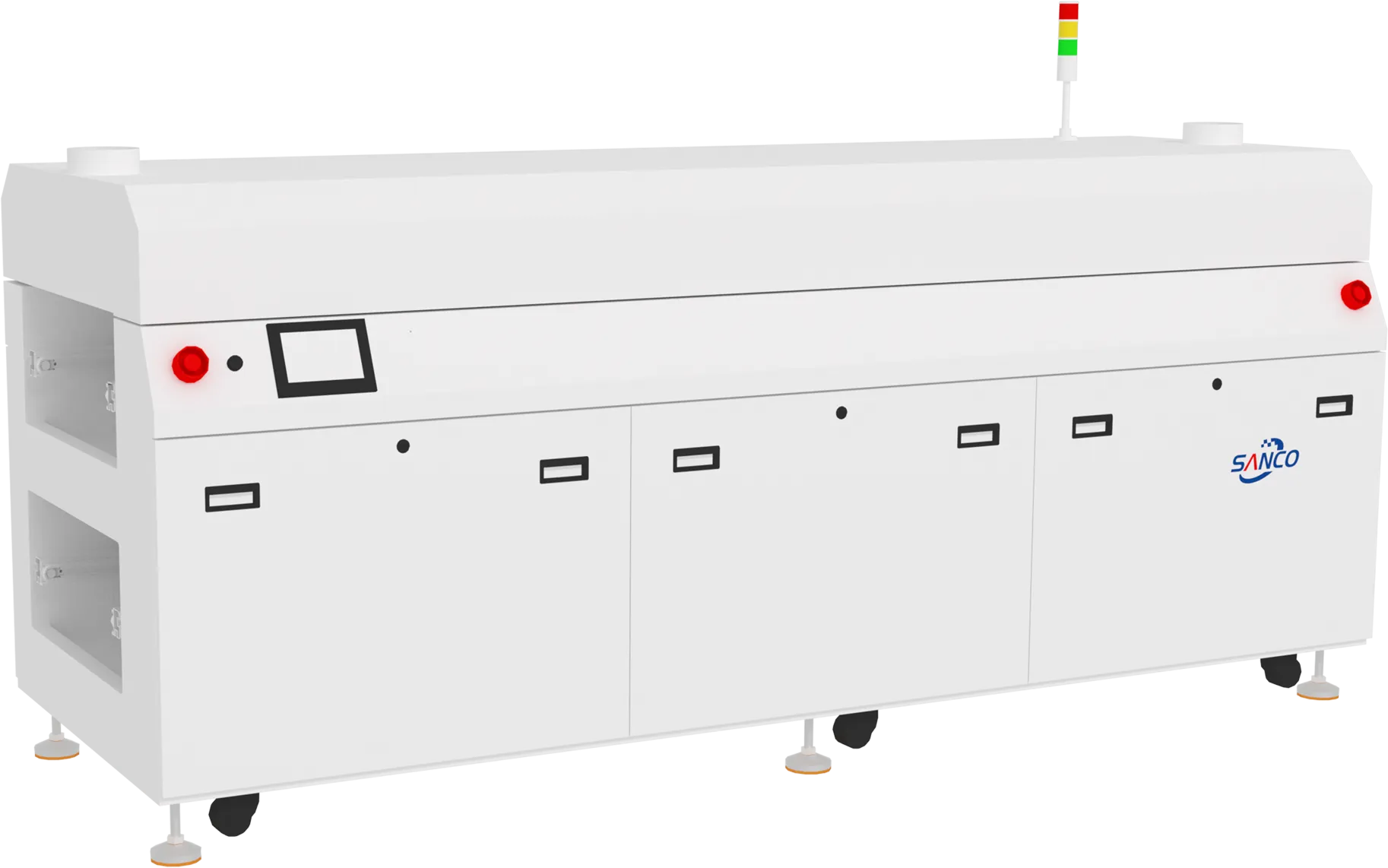
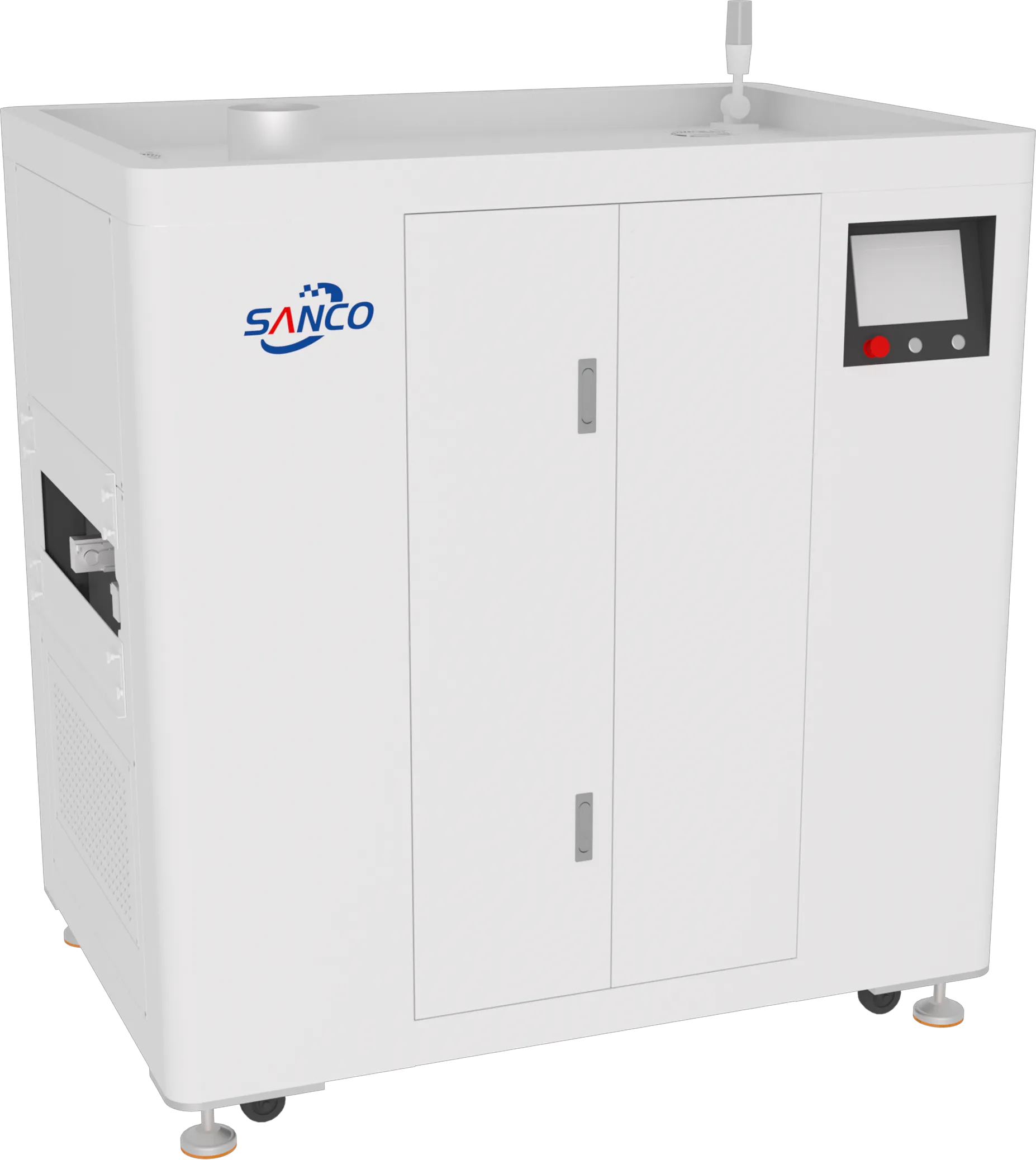
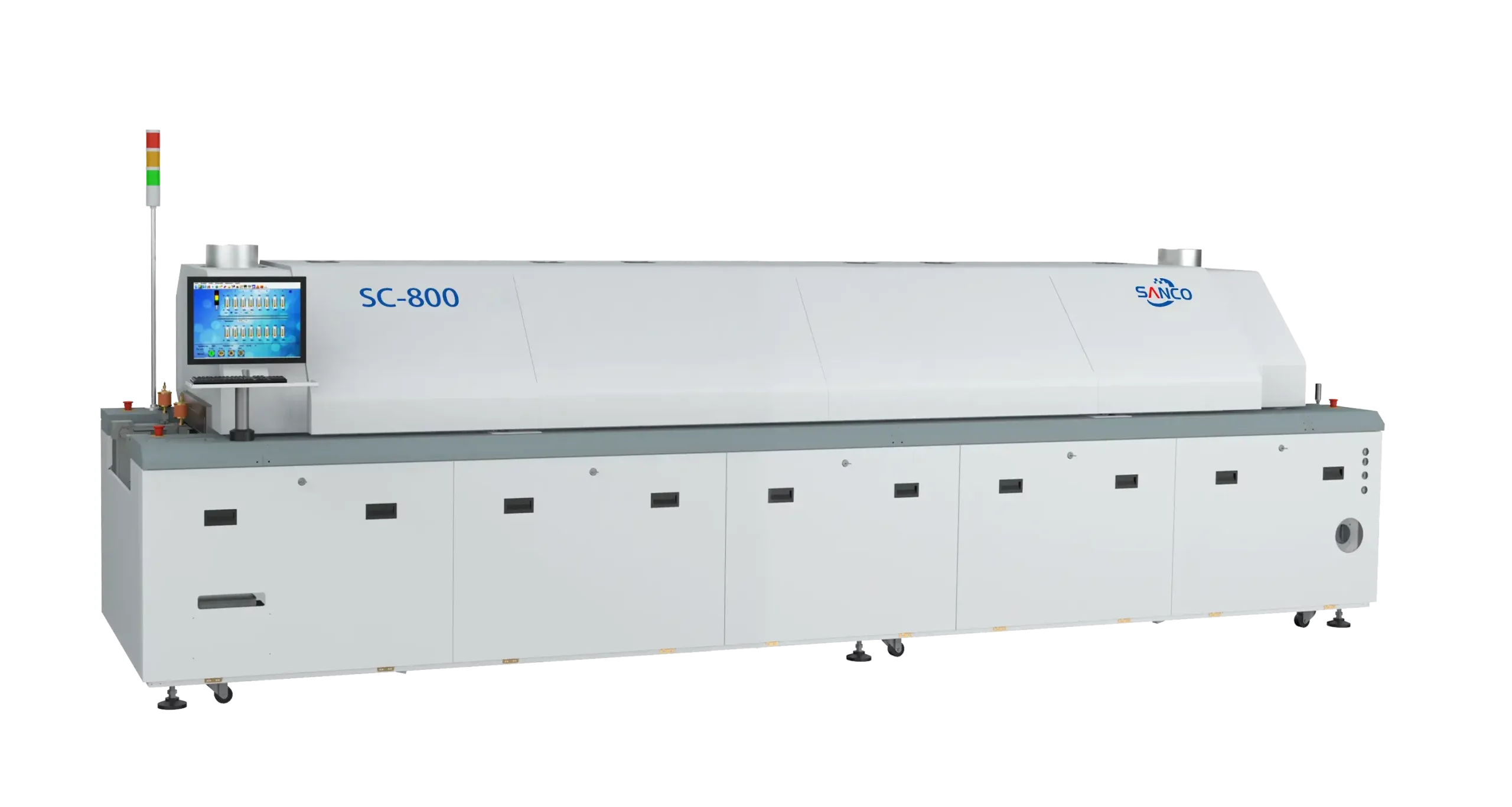
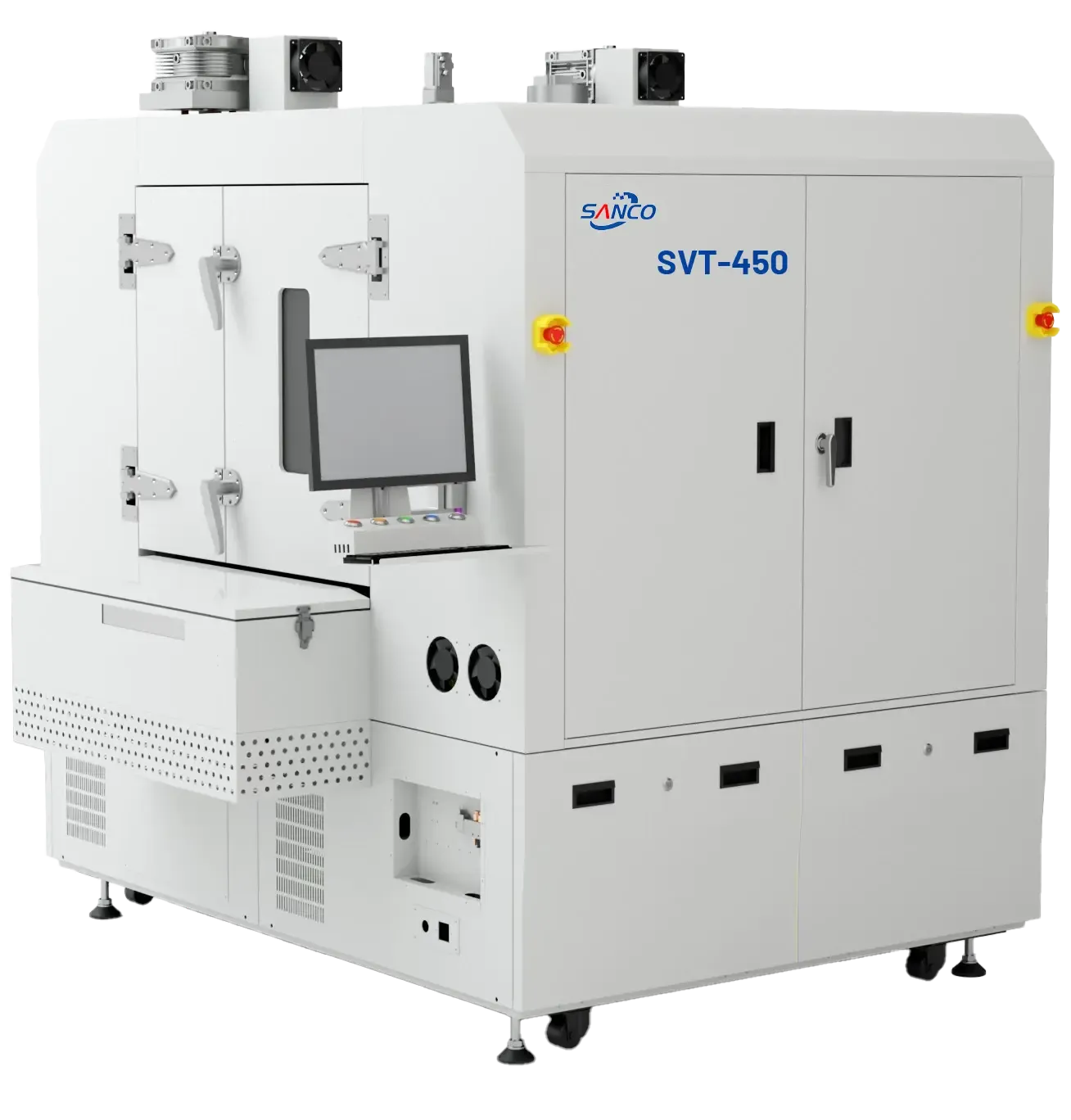
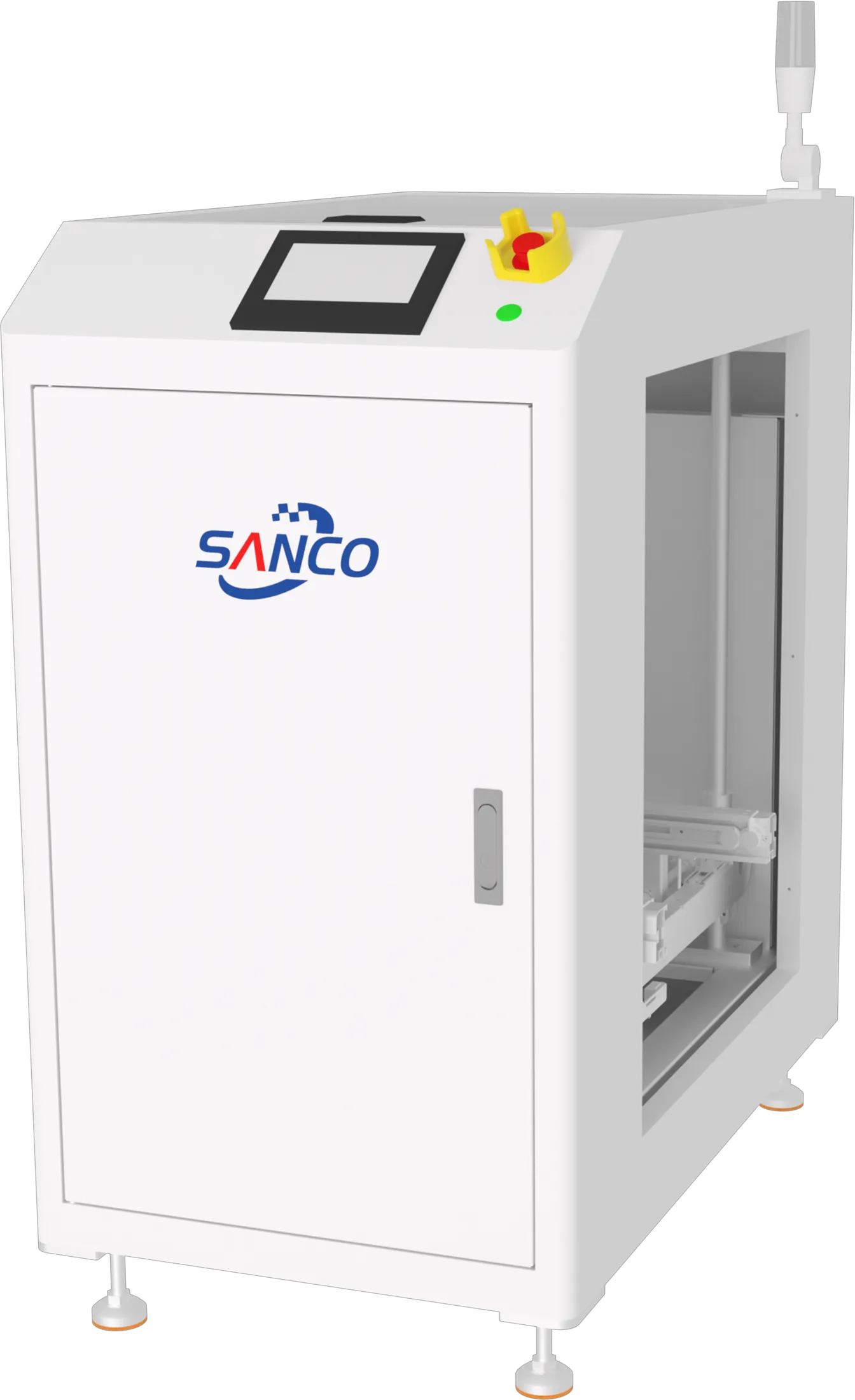
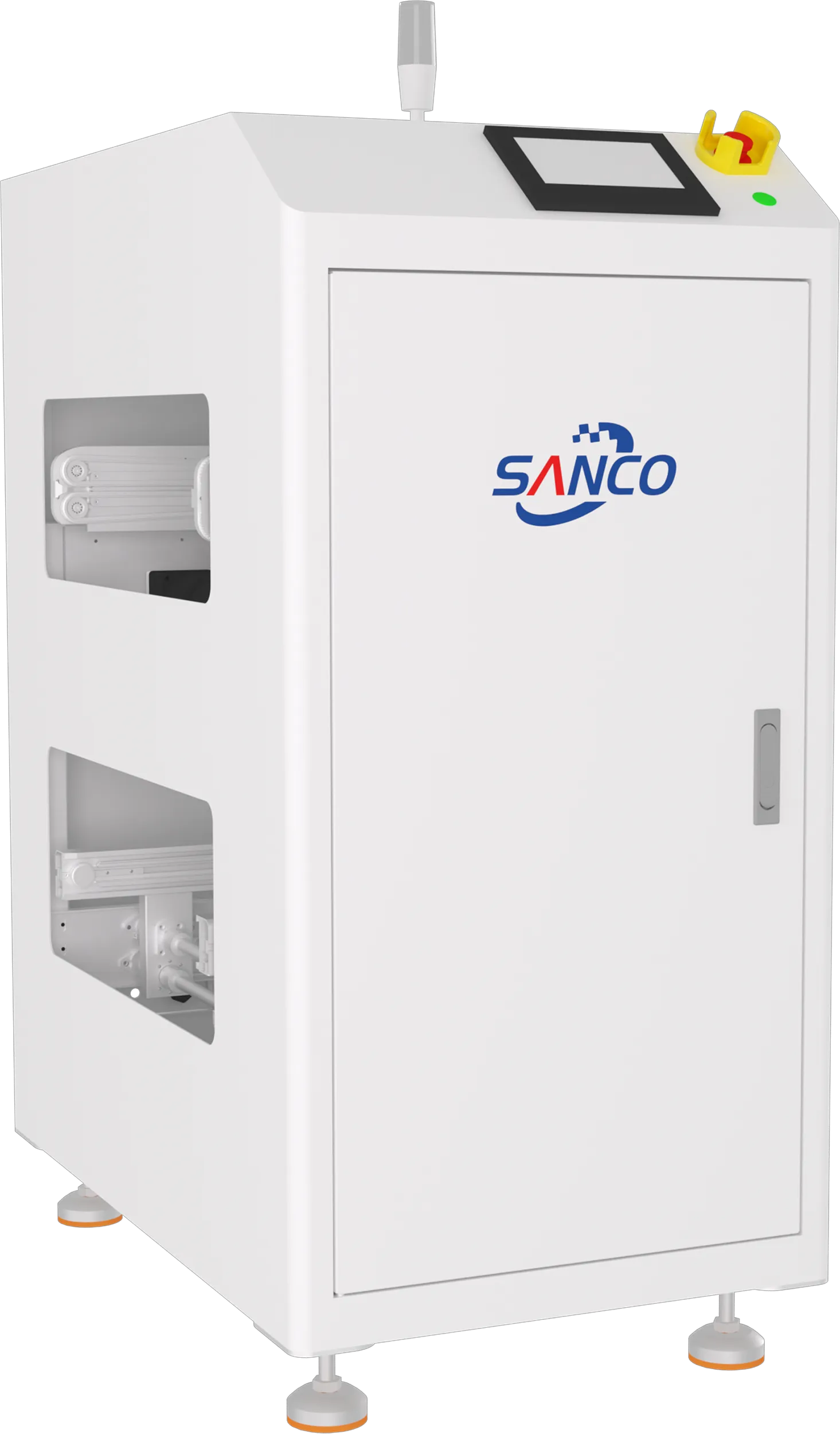
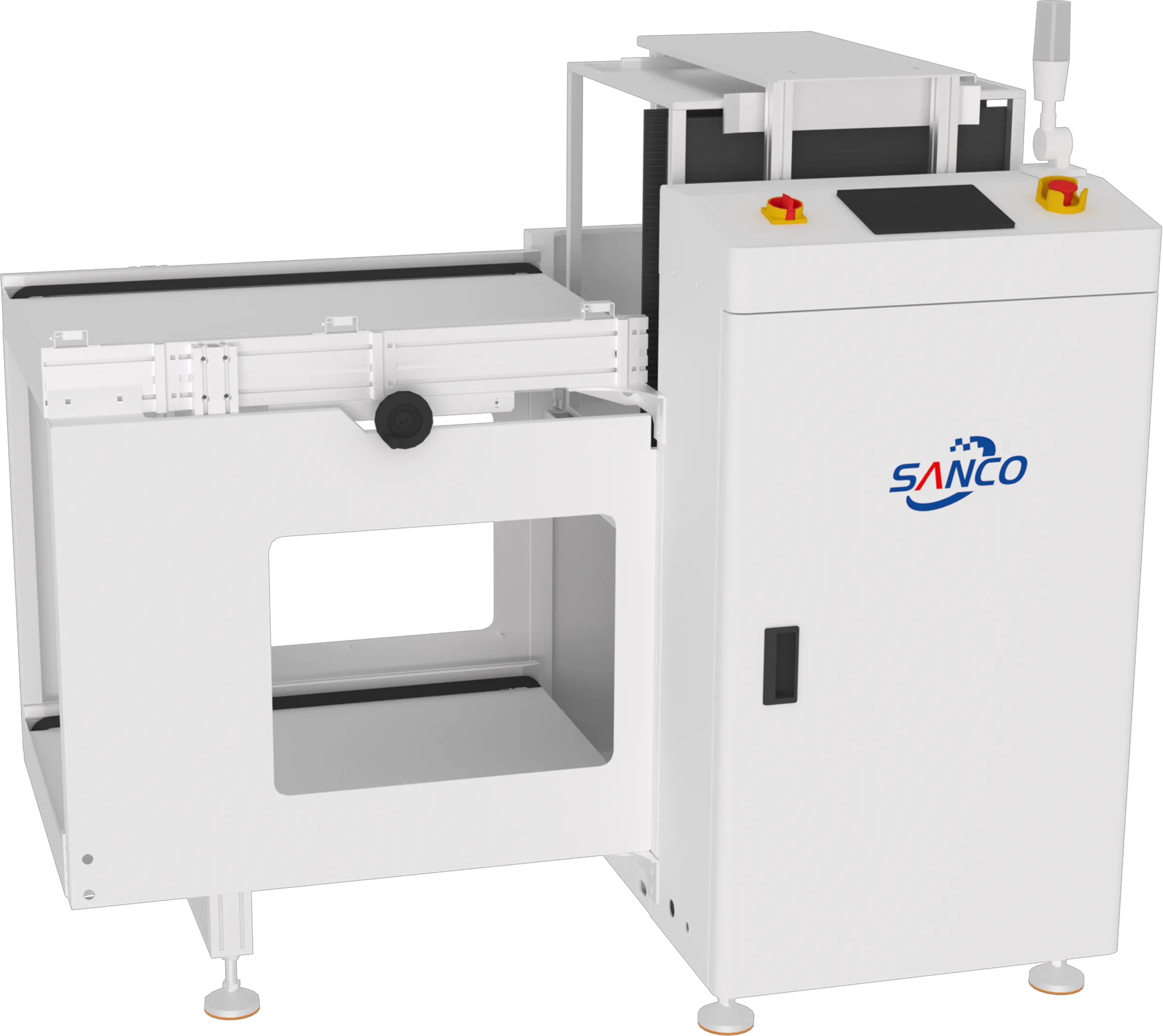
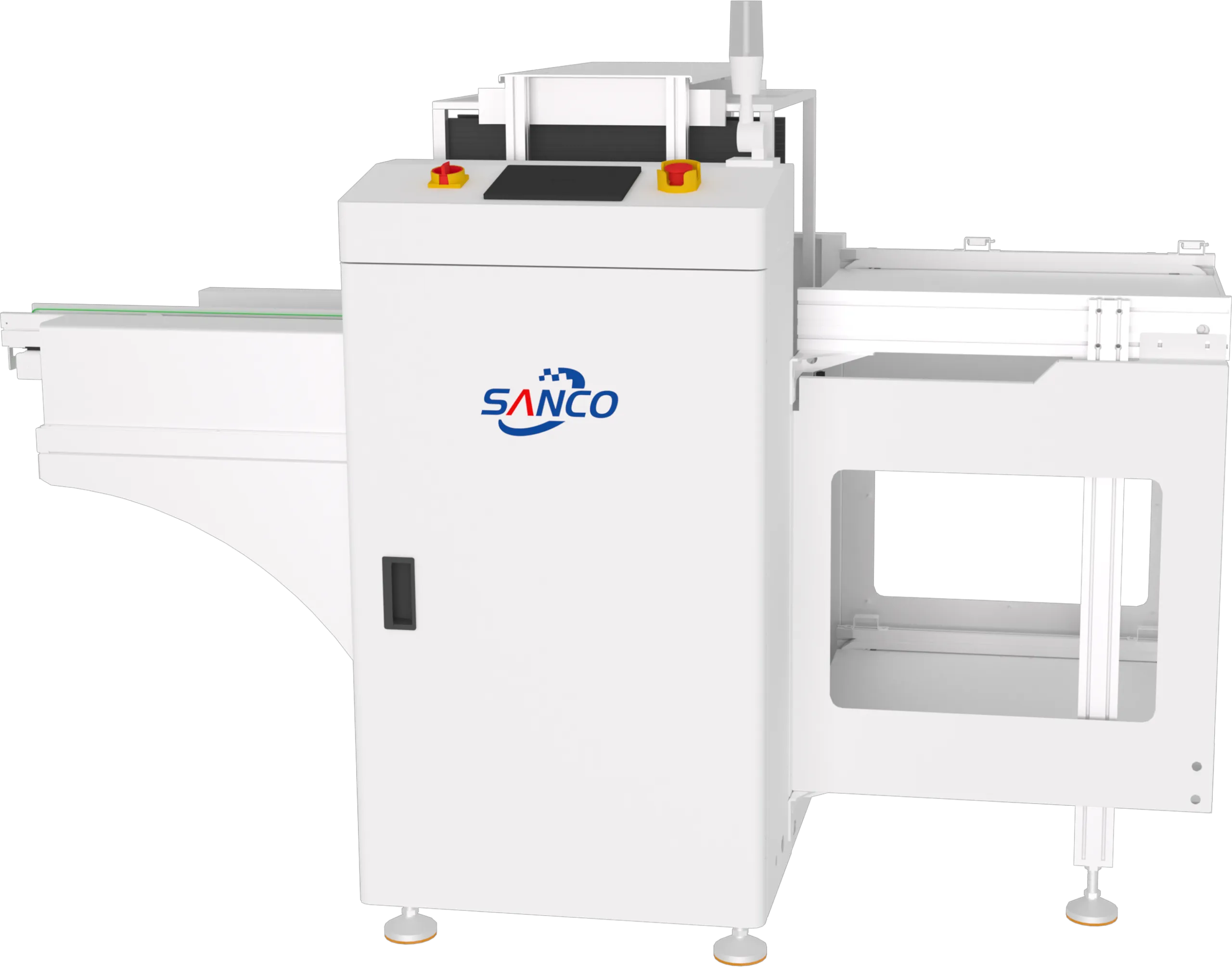
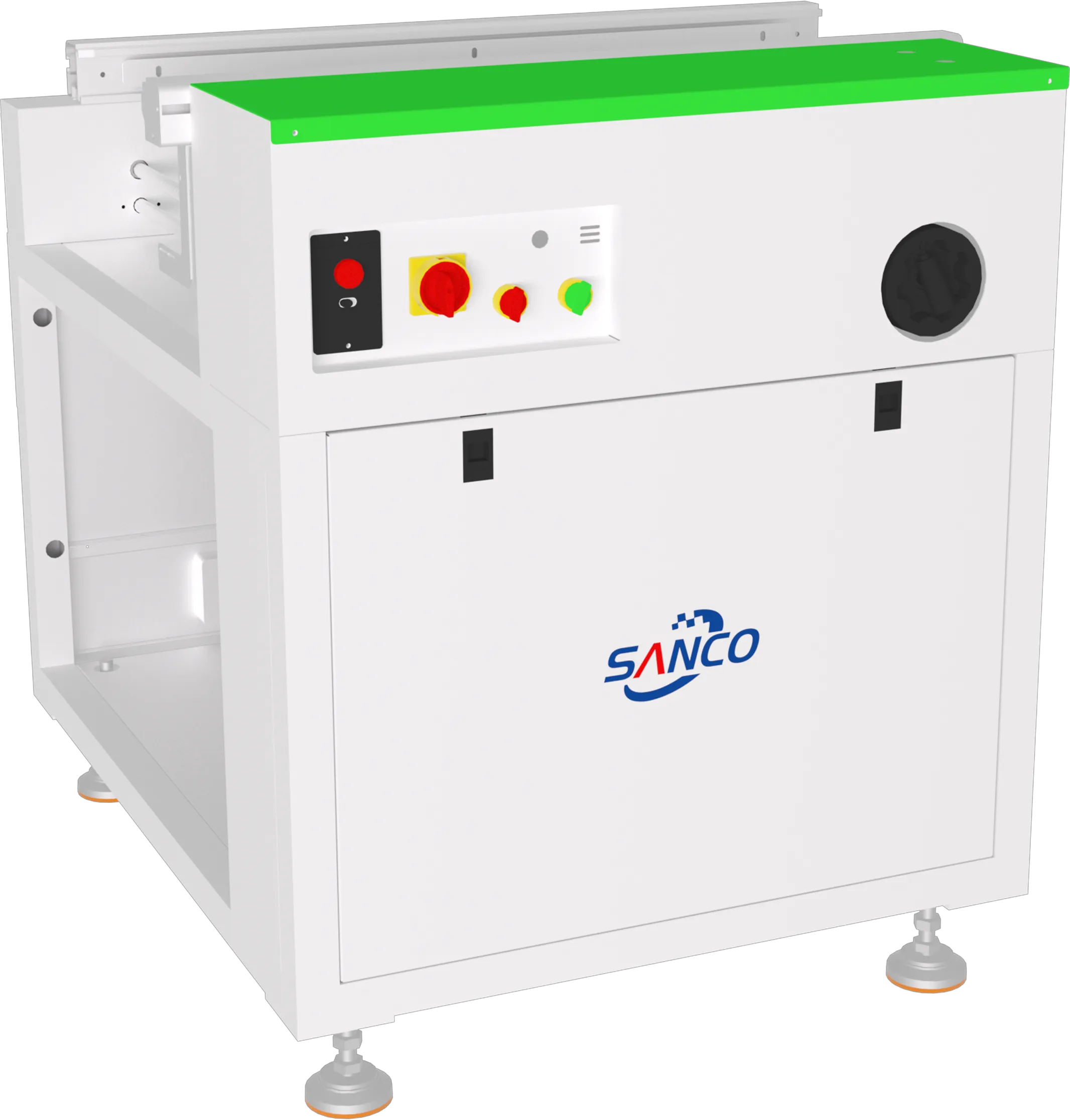
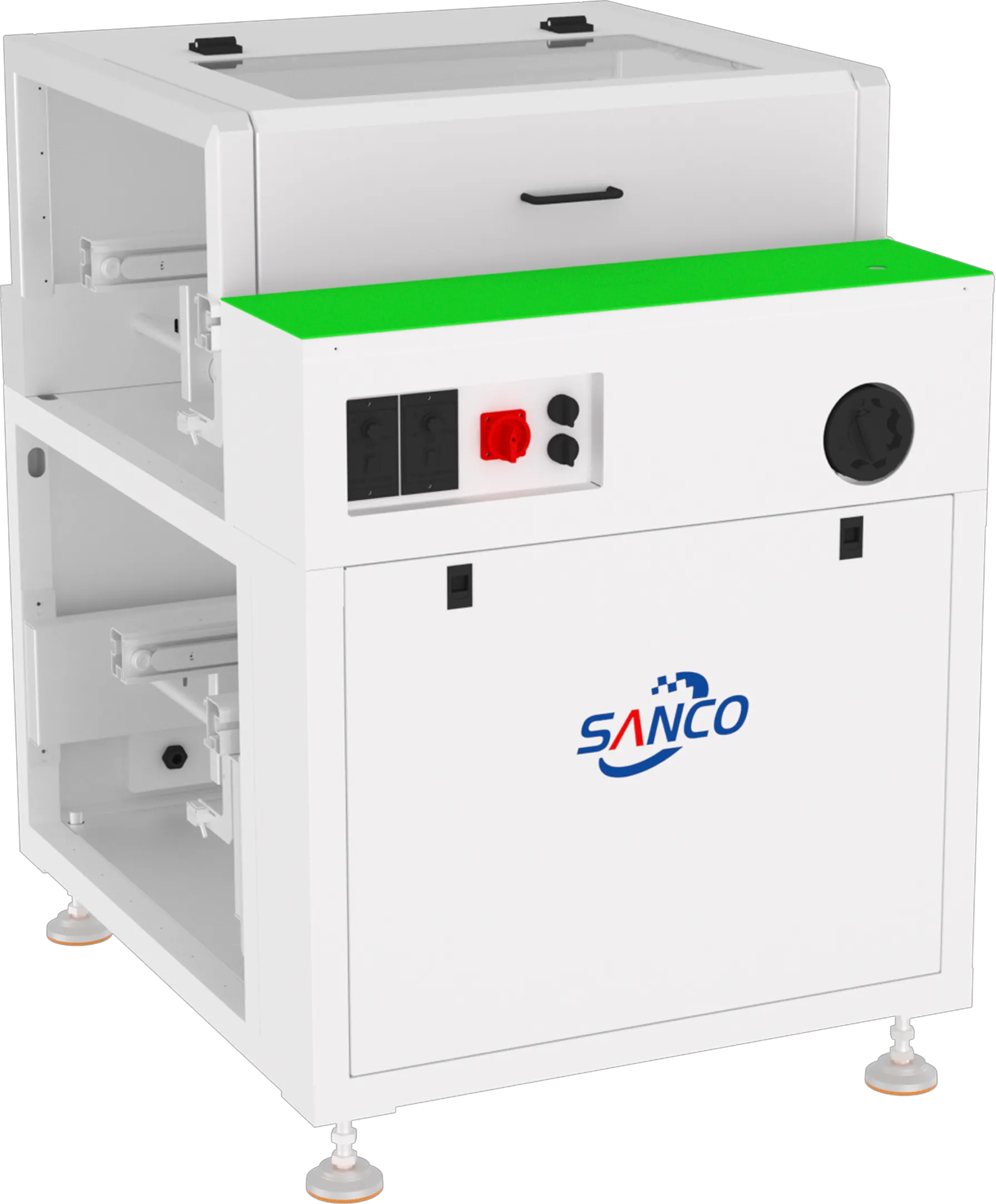
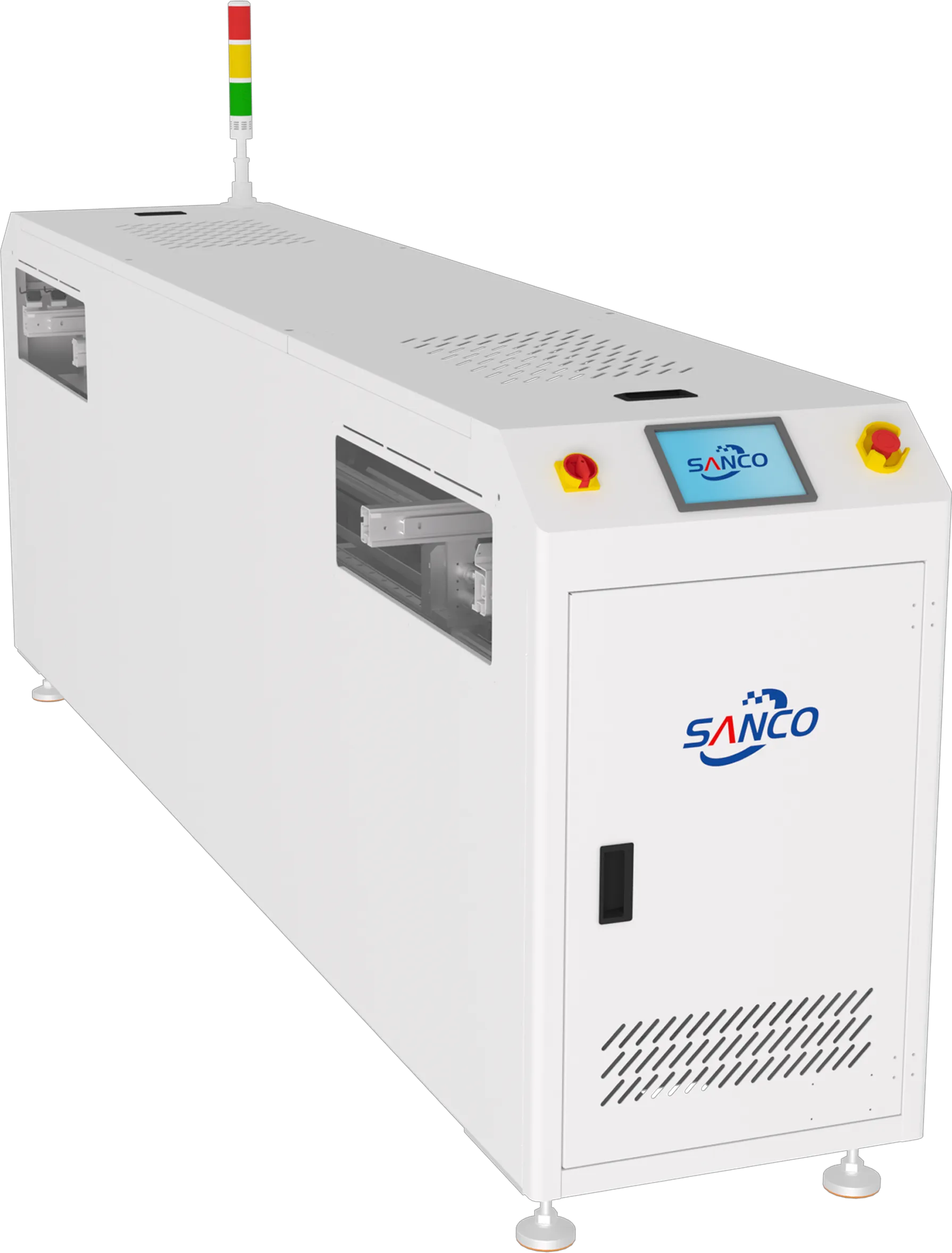
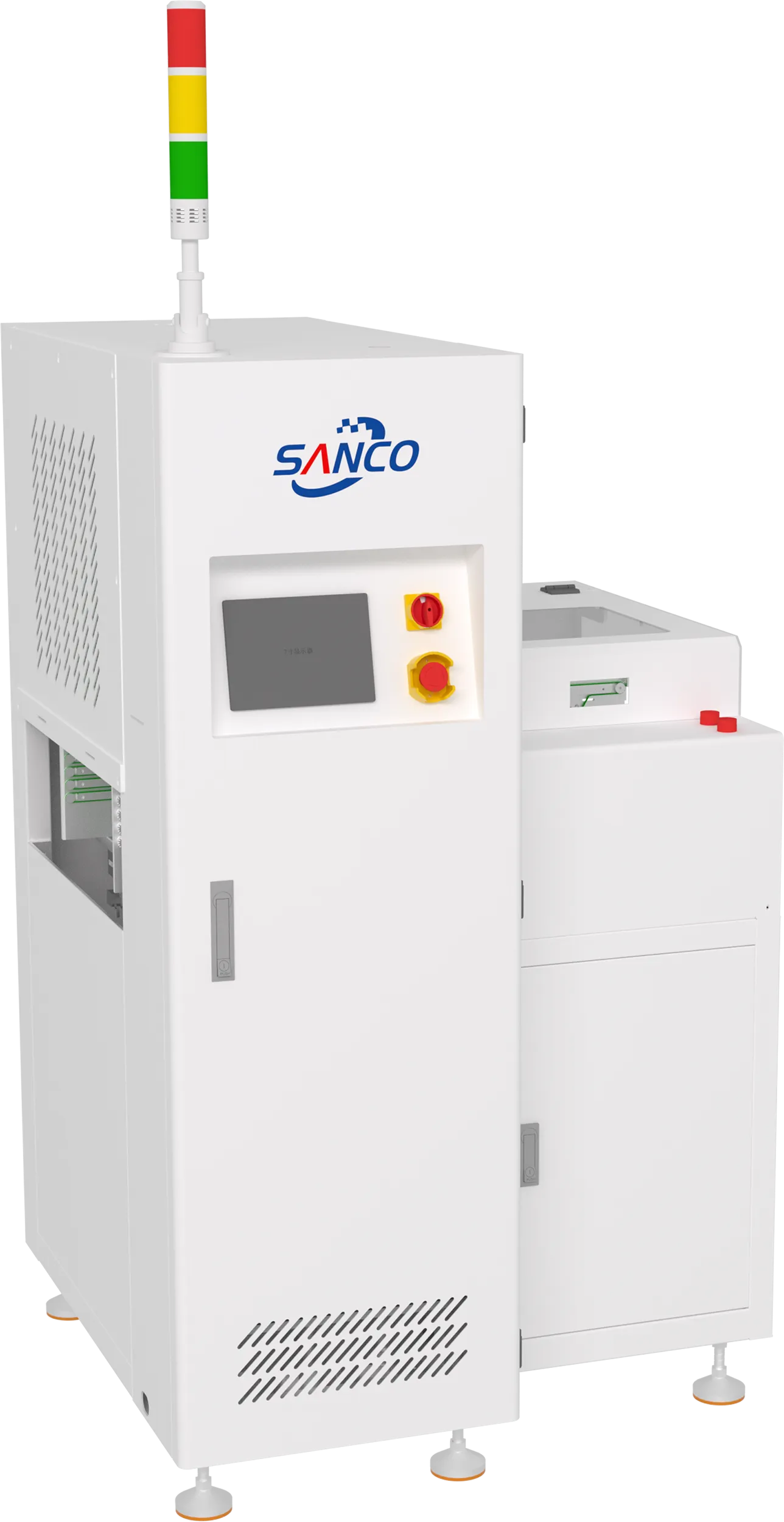
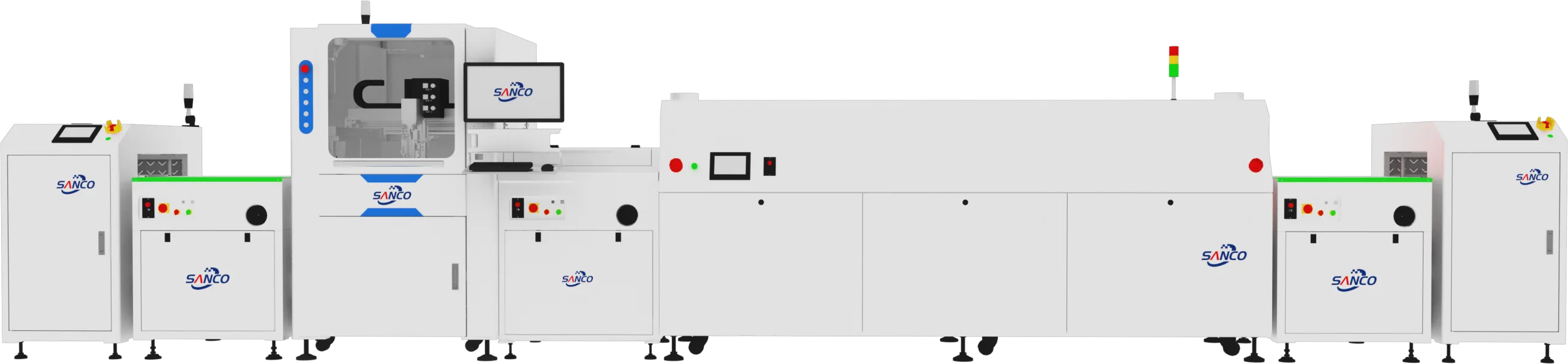

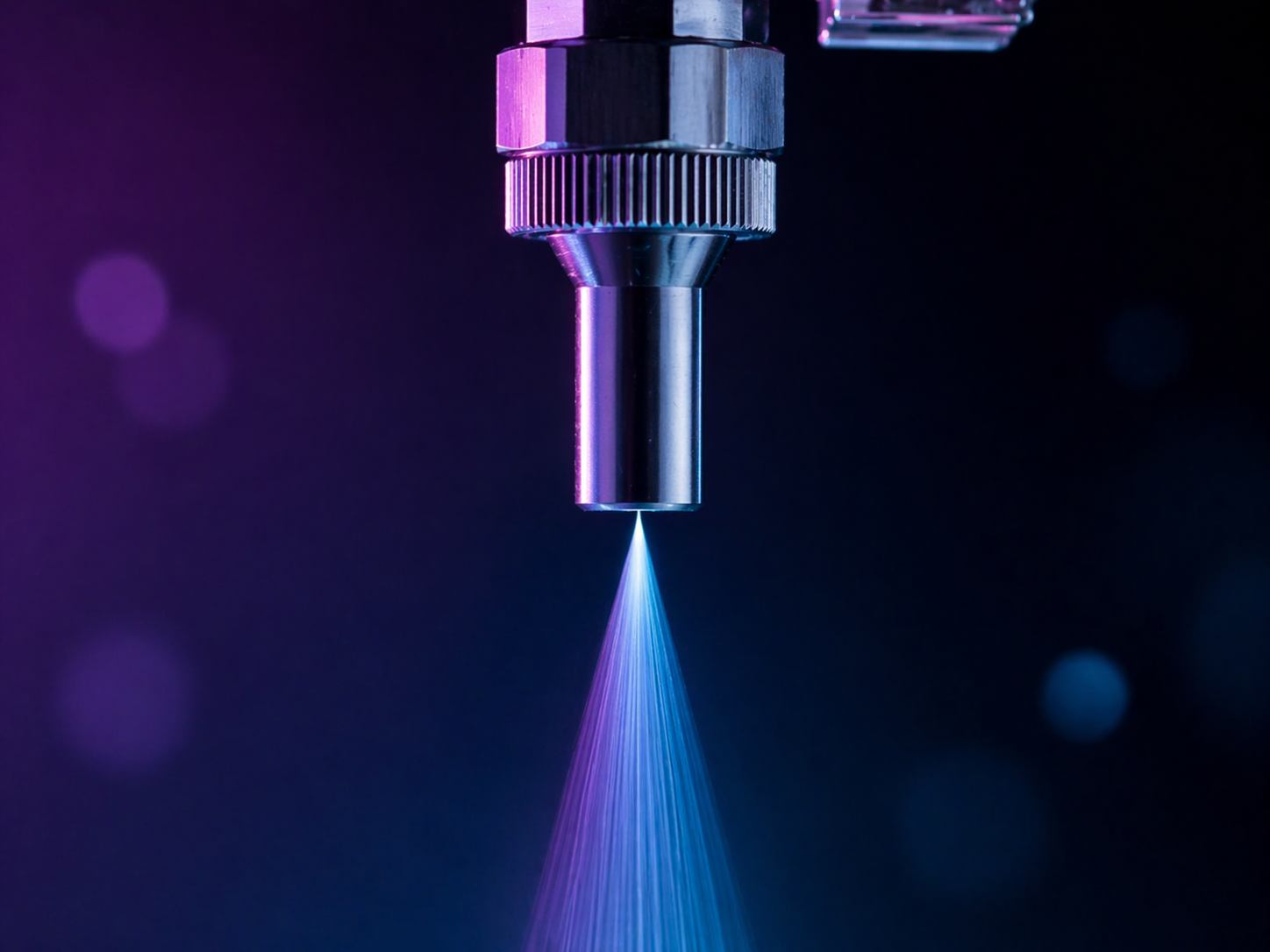
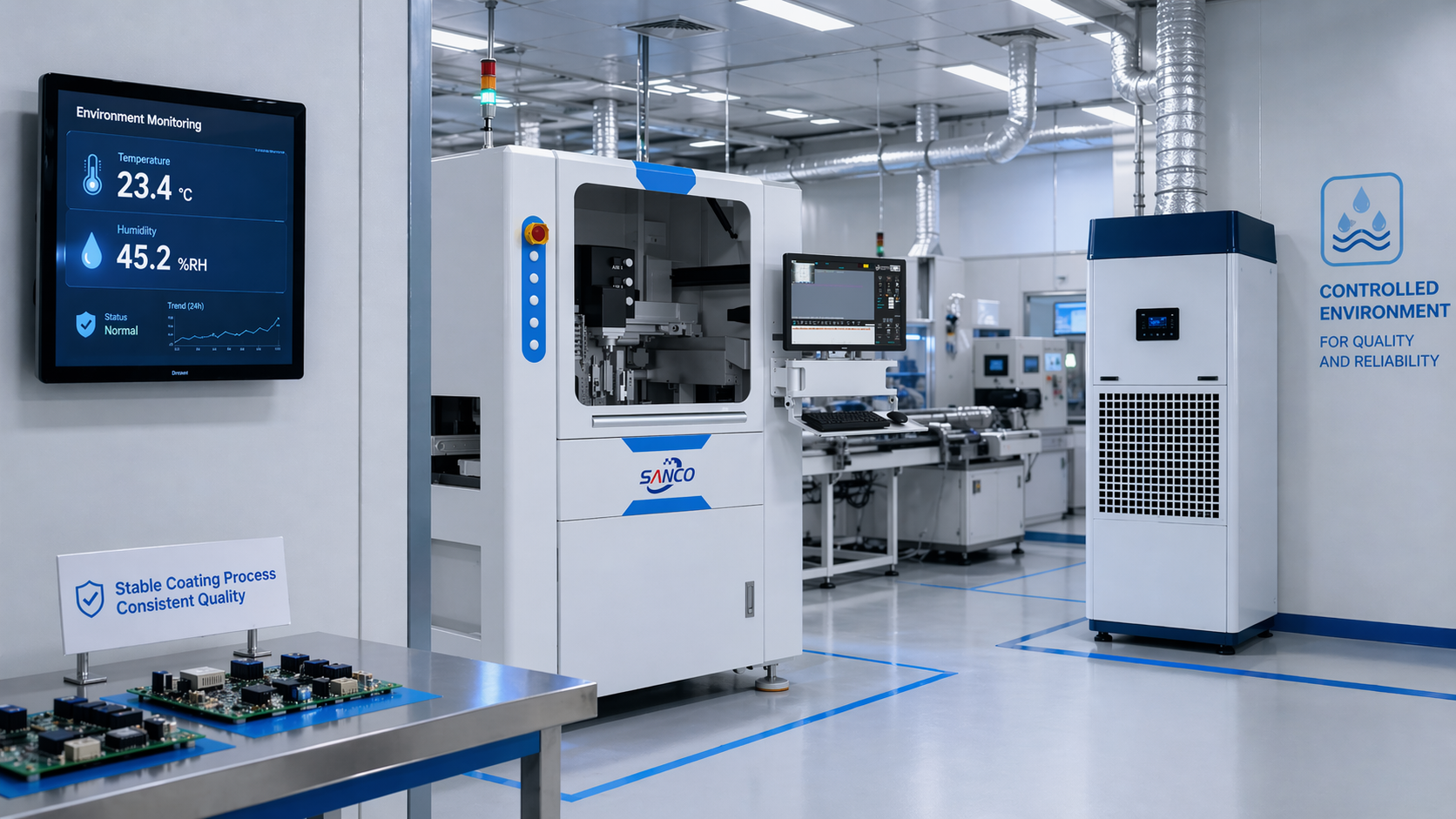
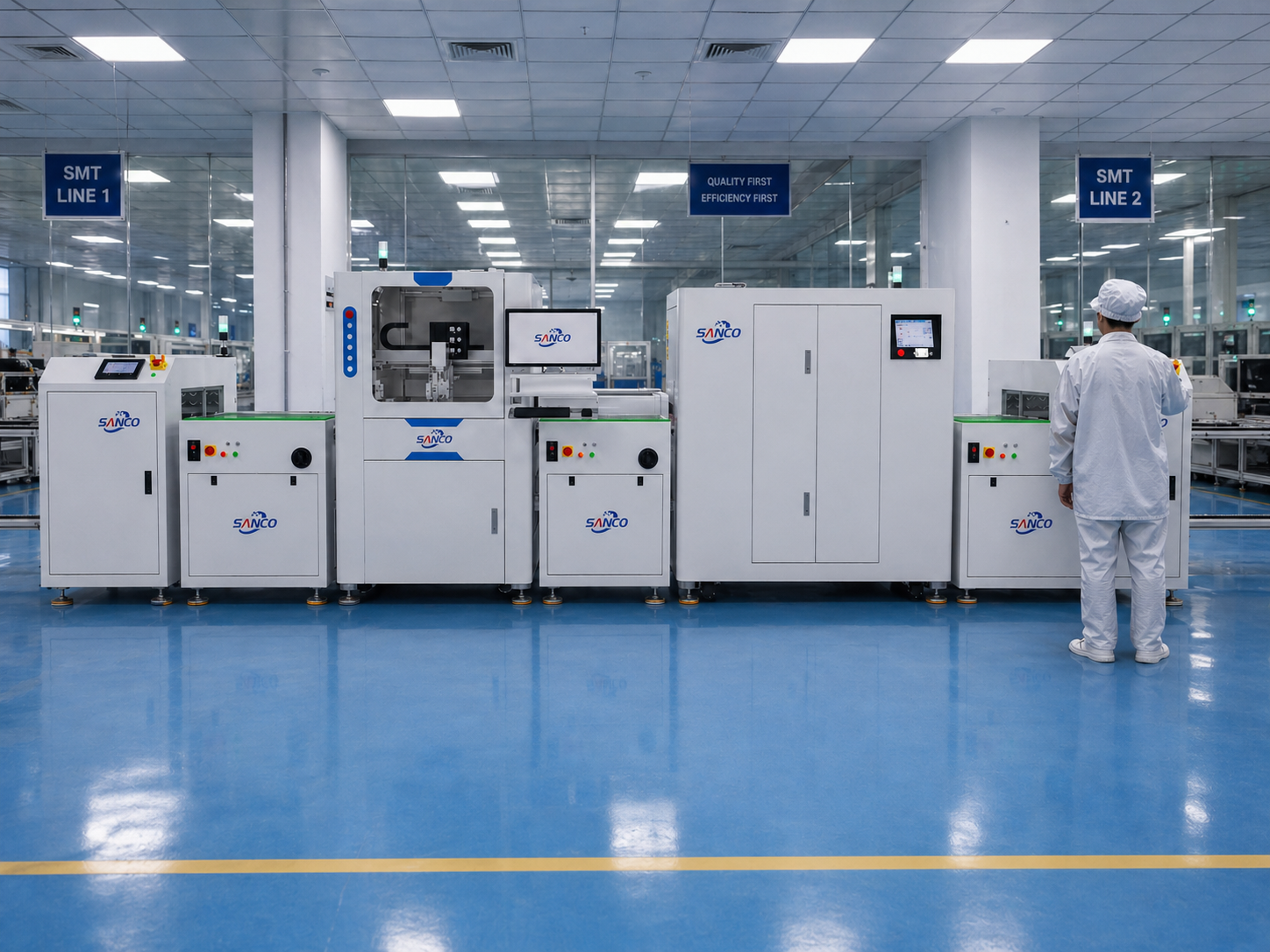
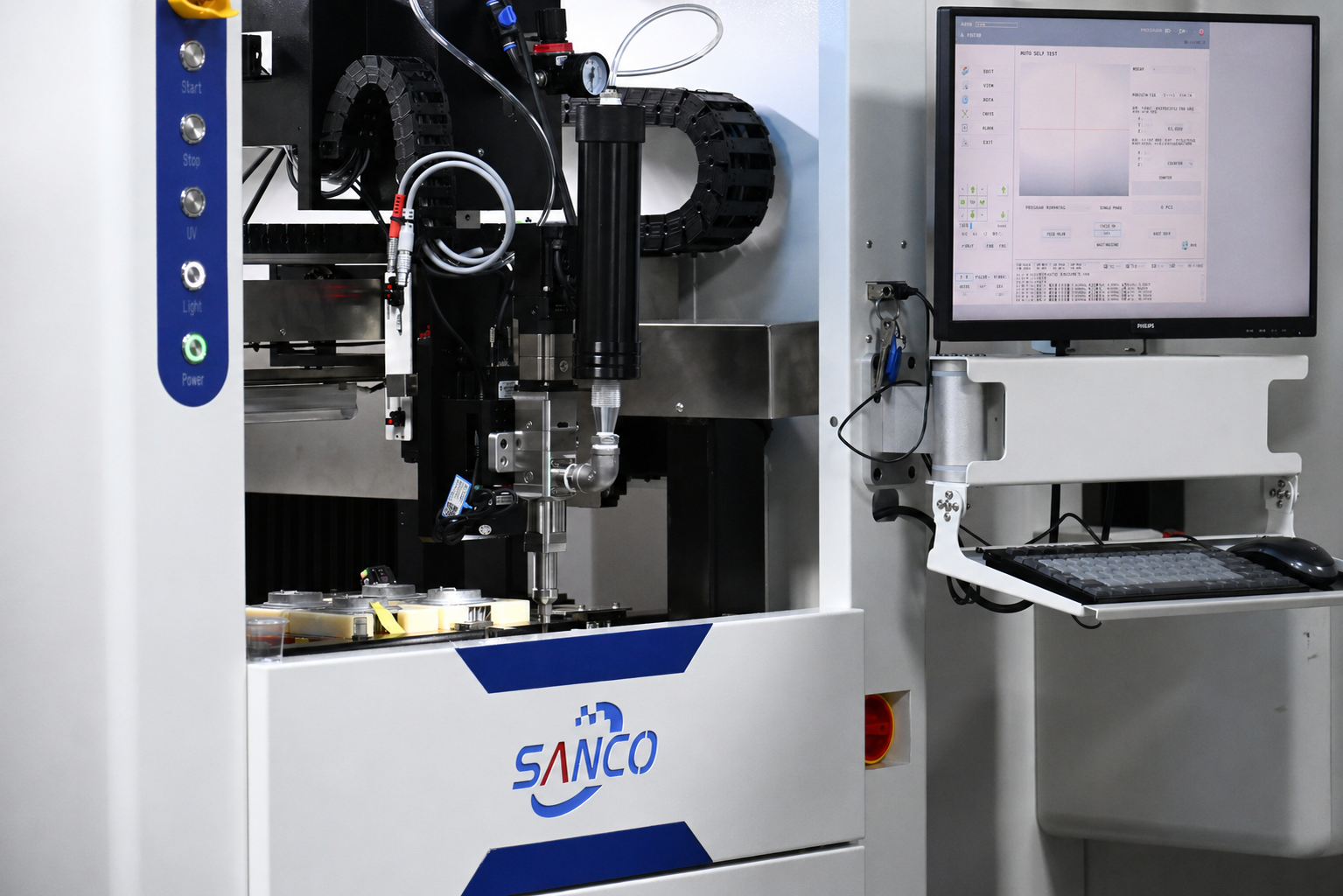
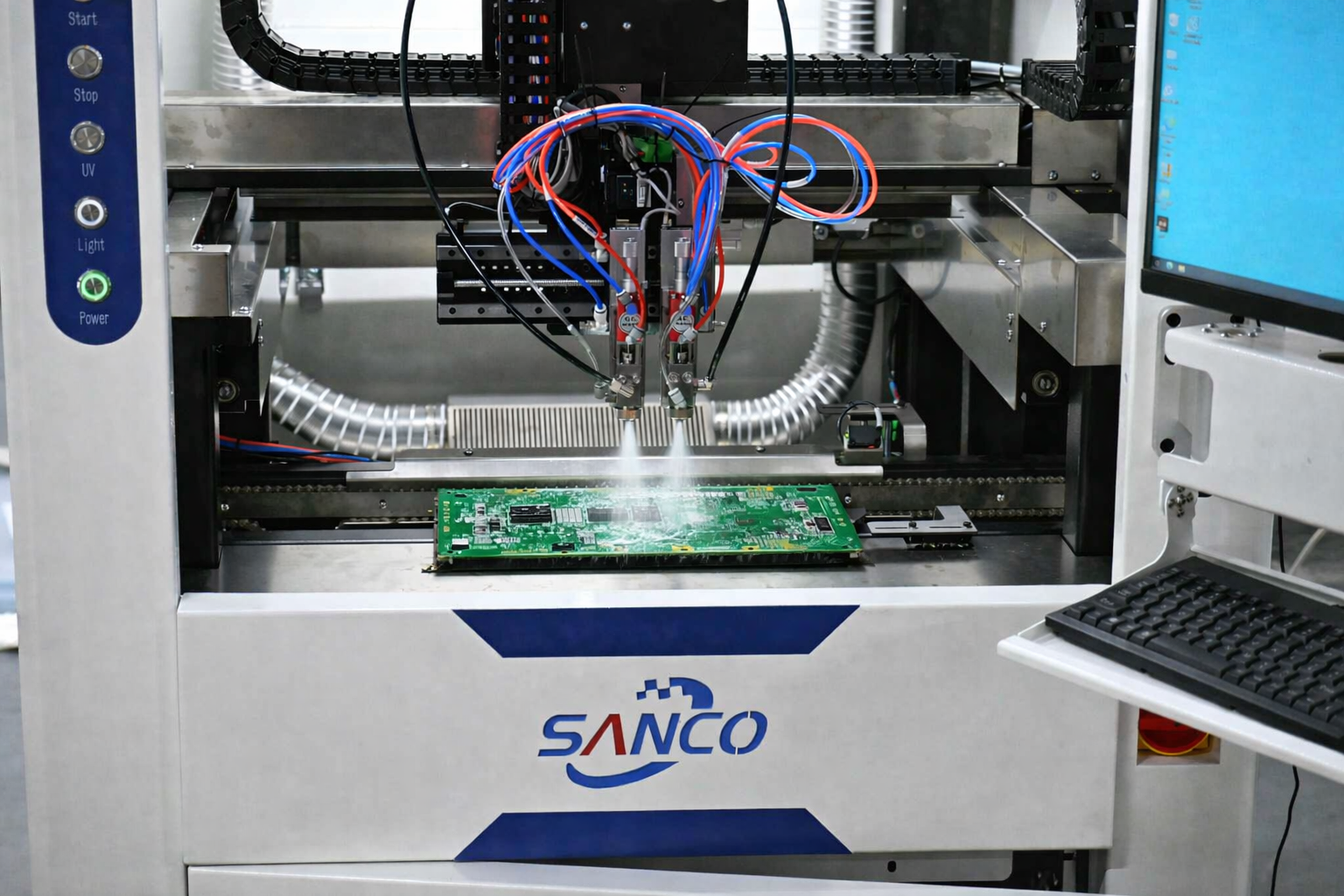
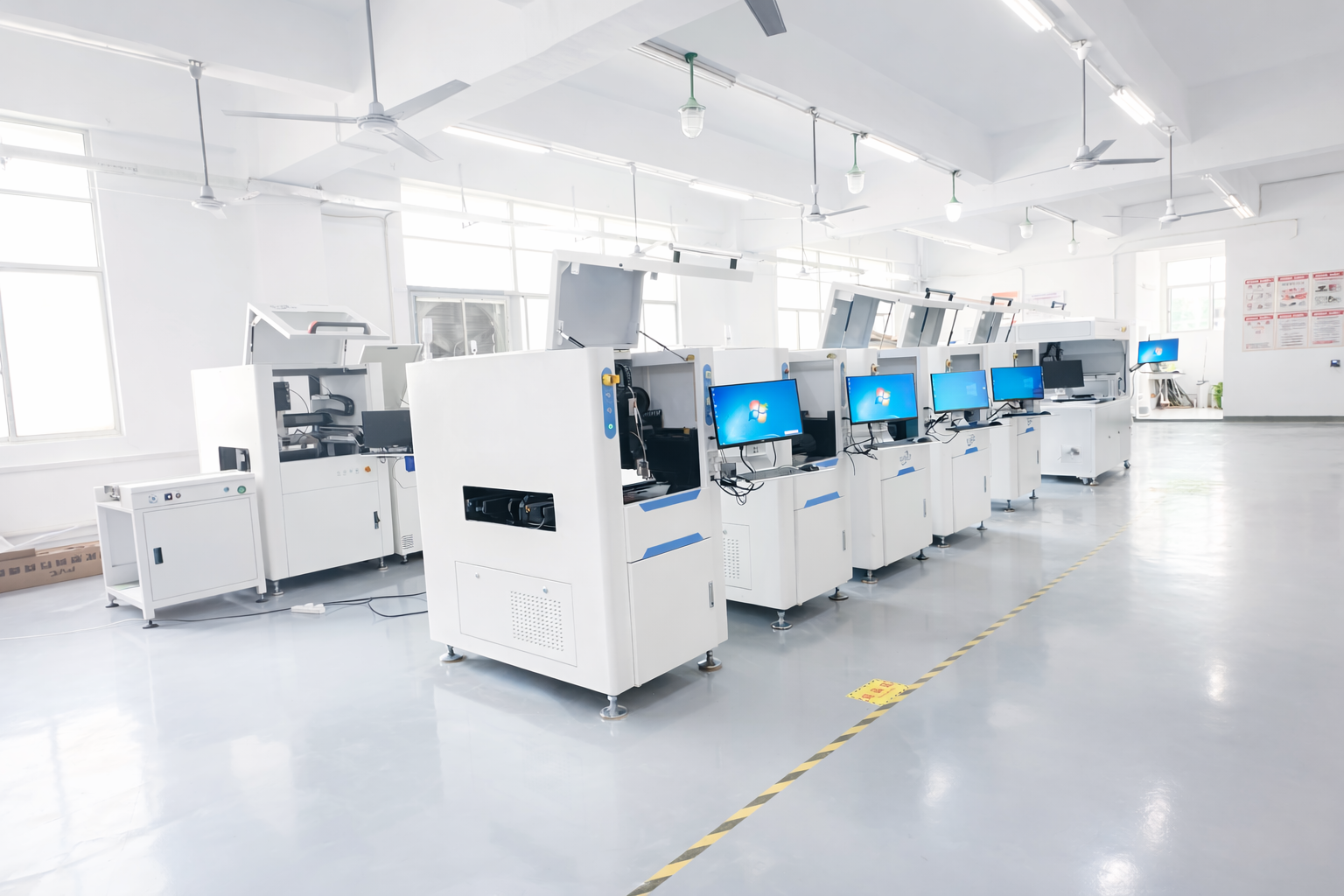
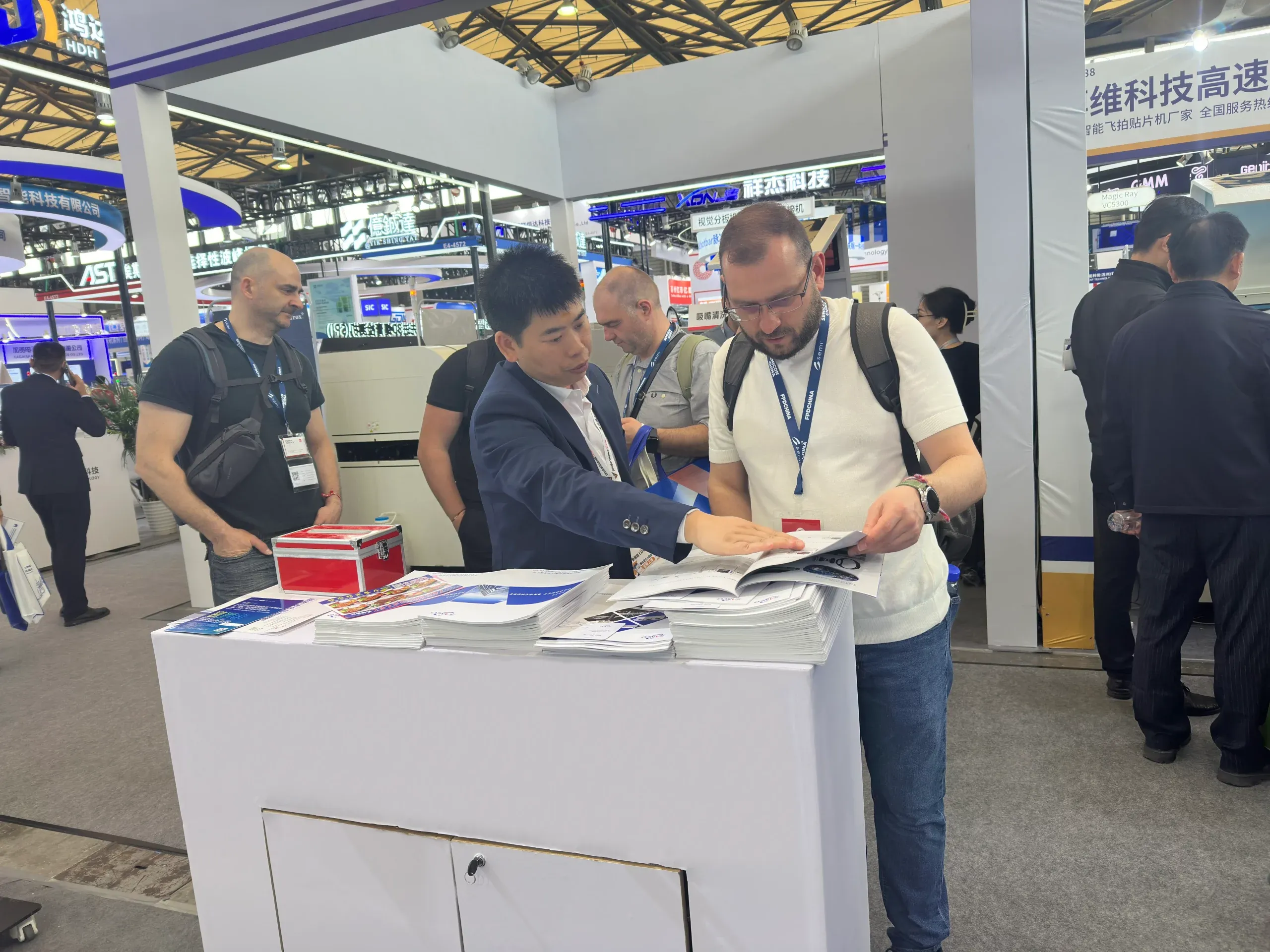
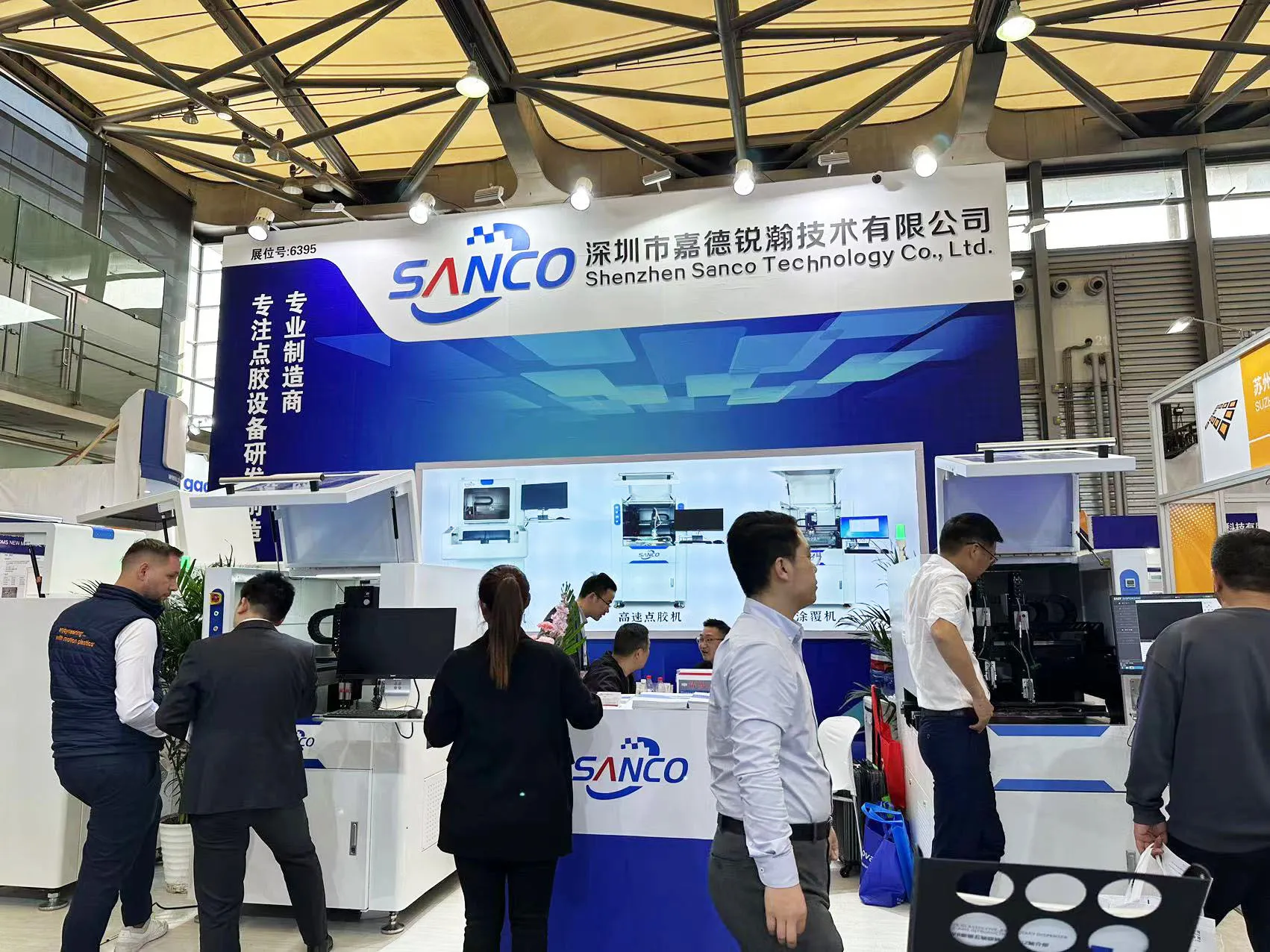
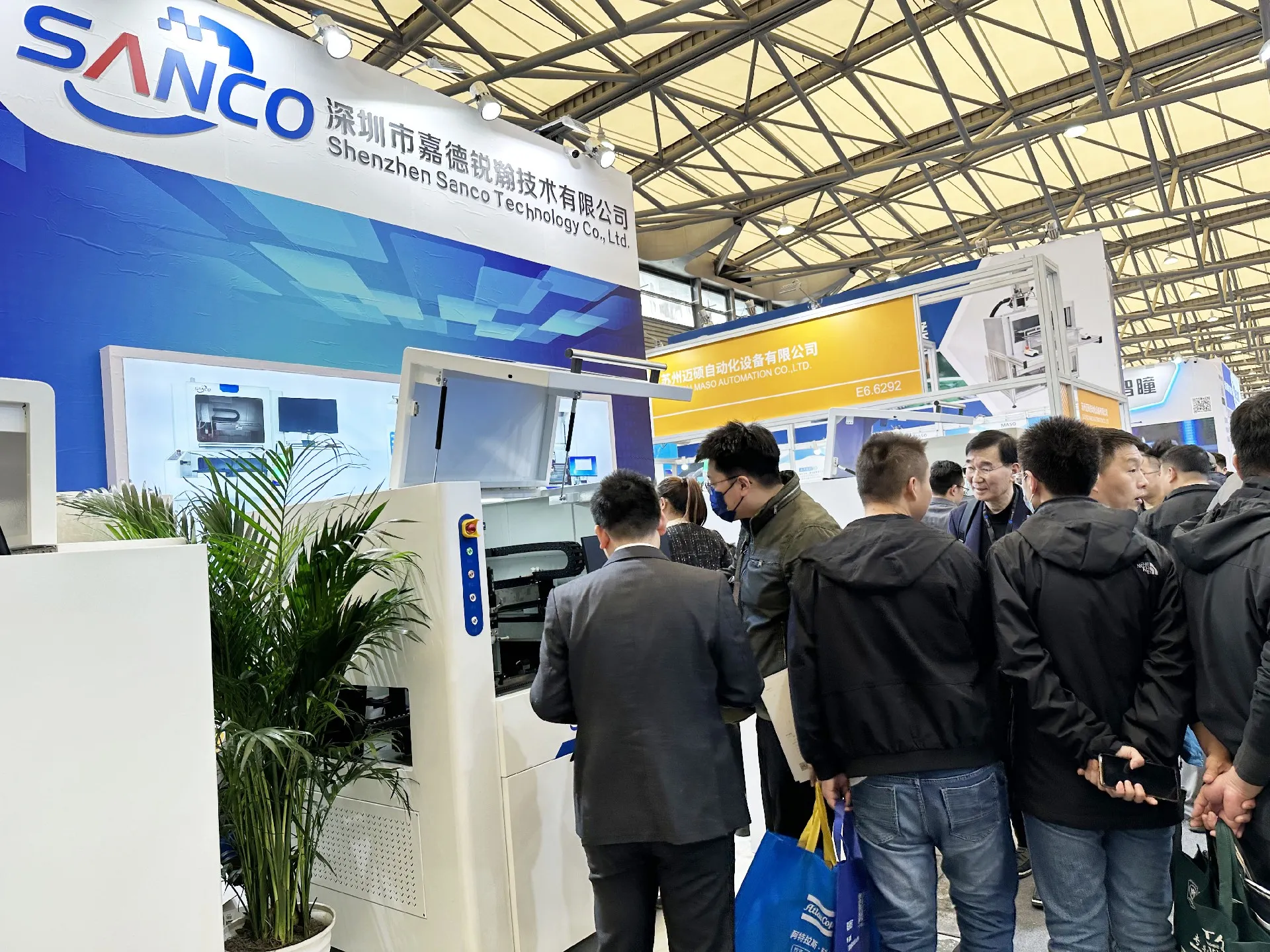
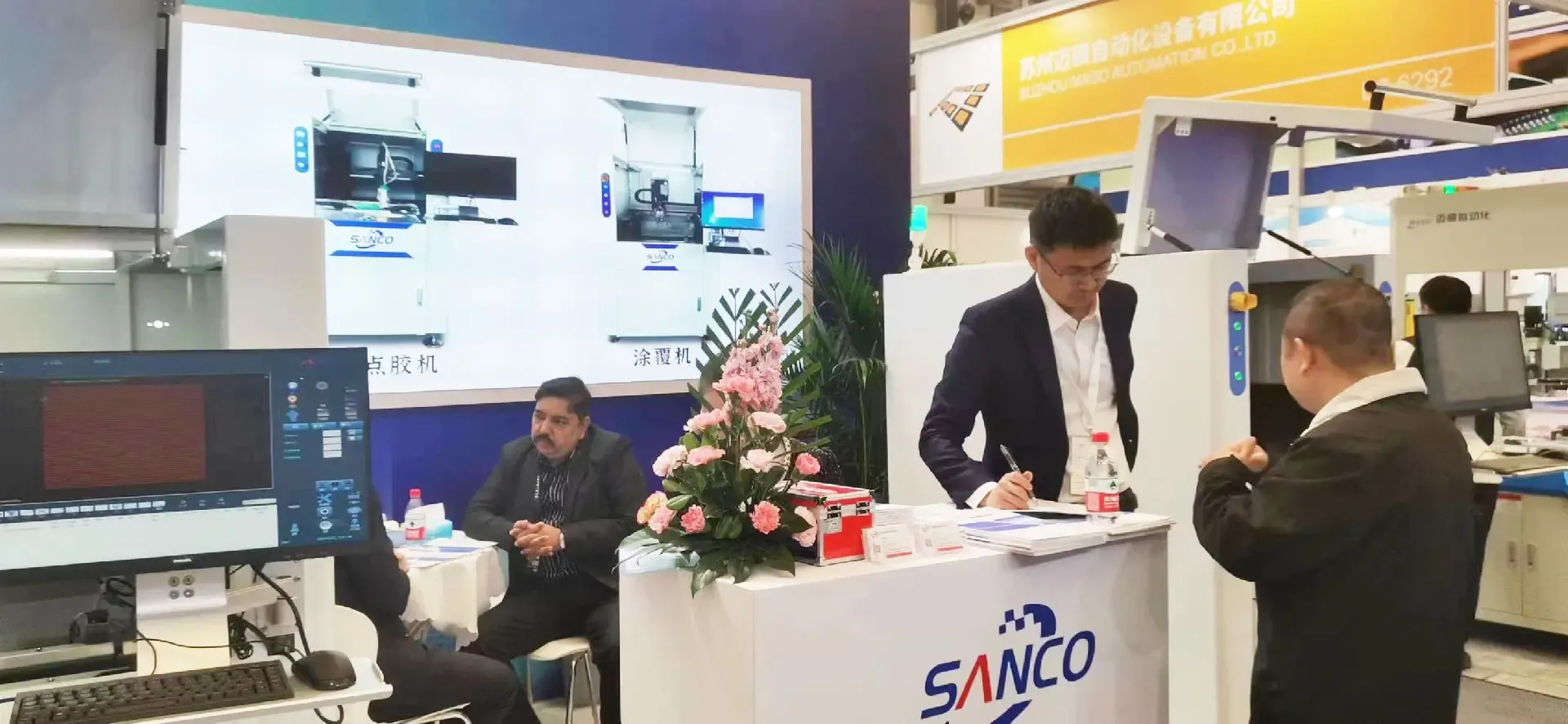
SANCO offers four main dispensing machine platforms to cover different production environments and process requirements:
- LM Series Inline High-Speed Dispensing Machine — for high-volume, continuous inline production requiring fast cycle times and stable output.
- DS Series Inline High-Speed Dispensing Machine — optimized for dual-station parallel dispensing, increasing throughput for demanding production lines.
- Offline High-Speed Dispensing Machine — a flexible standalone platform suitable for short runs, prototyping, and mixed-model production.
- Desktop Visual Dispensing Machine — compact, vision-guided, ideal for precision assembly, R&D, and low-volume specialized applications.
All platforms can be paired with SANCO's dispensing valves (Piezo, screw, or custom) and integrate with loaders, conveyors, curing ovens, and AOI systems.
→ View Dispensing MachinesSANCO dispensing systems are compatible with a wide range of industrial fluids used in electronics manufacturing:
- Adhesives (epoxy, acrylic, cyanoacrylate)
- Silicone sealants and RTV compounds
- UV-curable adhesives and coatings
- Solder paste and flux
- Thermal interface materials (thermal grease, phase-change materials)
- Underfill and encapsulants
- Conformal coating fluids (acrylic, polyurethane, silicone, epoxy)
- Conductive adhesives and silver paste
Material viscosity range, pot life, and dispensing volume requirements determine valve selection. Our application engineers will recommend the right valve and parameter configuration for your specific fluid.
Piezo Valve — uses piezoelectric actuation for ultra-fast, non-contact jetting. Best for very small dot sizes (μL and below), high-speed applications, and materials with low to medium viscosity. Offers precise volume control without needle contact with the substrate.
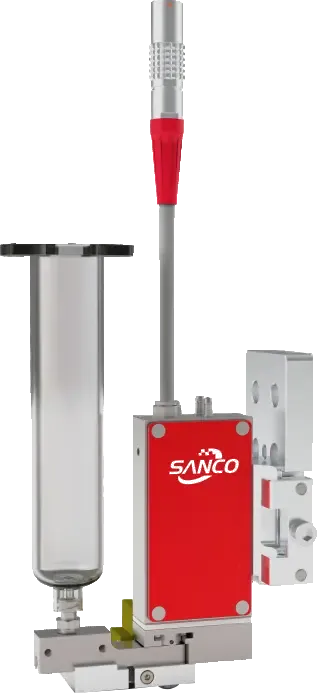
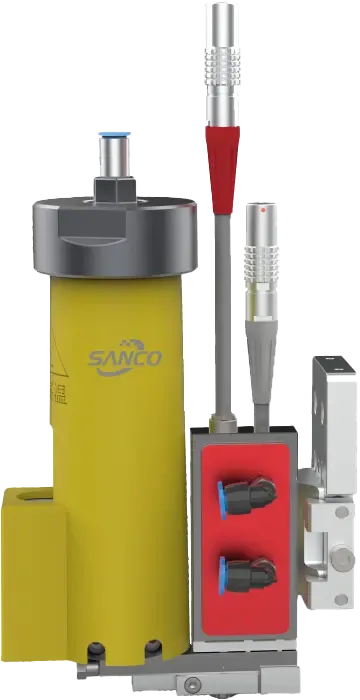
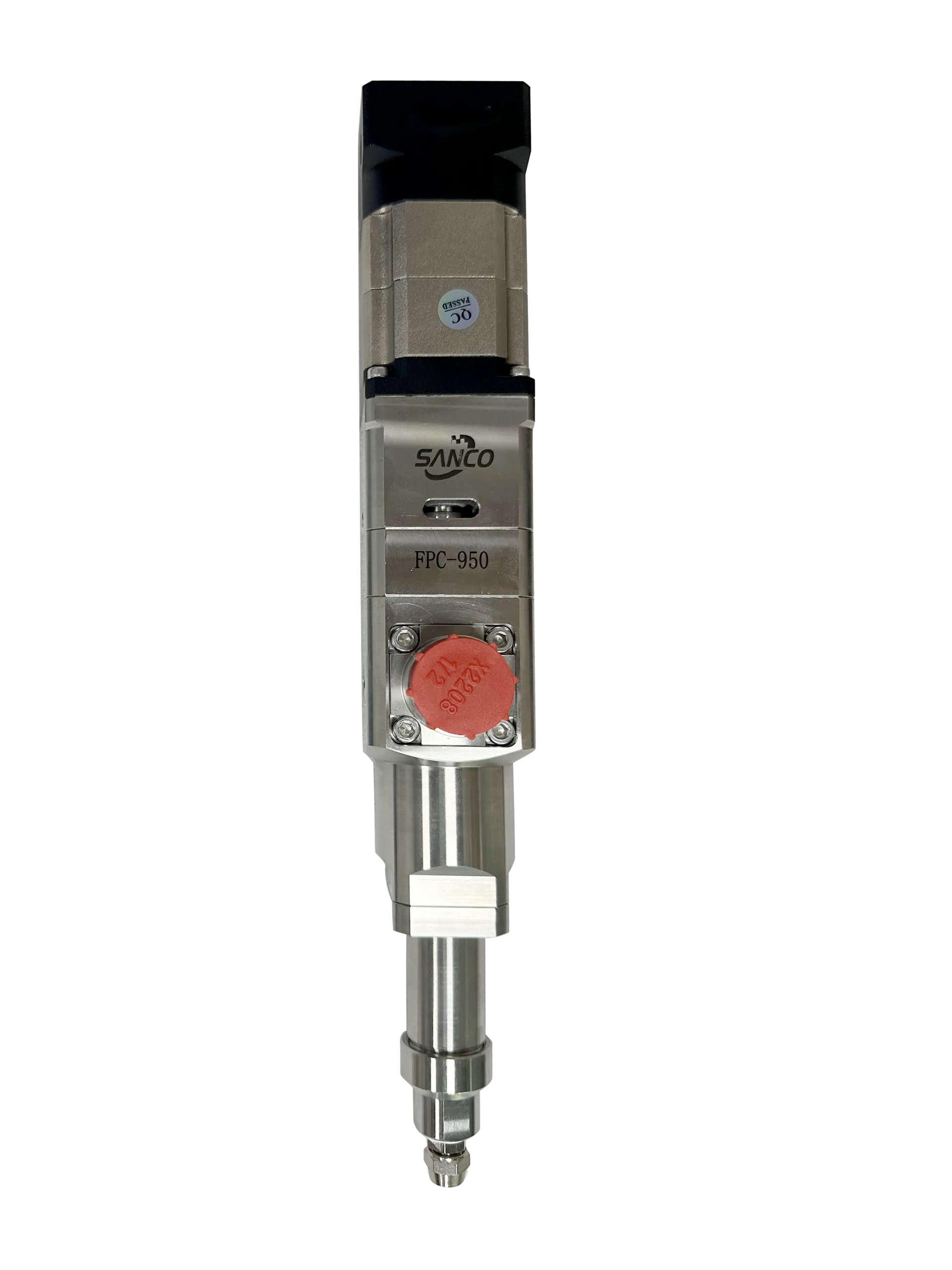
Screw Valve (Single or Dual Liquid) — uses an auger screw mechanism to meter and dispense fluid. Best for higher viscosity materials, paste-like fluids, and applications requiring stable continuous bead dispensing. Single liquid for one-part materials; dual liquid for two-component mixing applications (AB glue, epoxy, polyurethane).
The right choice depends on your fluid's viscosity, required dot size, production speed, and whether mixing is needed. SANCO's application team will run material trials to confirm valve selection before delivery.
→ View Piezo Valve → View Screw ValveSANCO dispensing machines achieve motion positioning accuracy of ±5μm and dispensing volume repeatability of ±1% under validated process conditions. This is supported by:
- High-precision servo or linear motor drive systems
- Closed-loop vision correction using CCD/vision cameras
- Real-time glue weight monitoring (optional)
- Temperature-controlled valve systems for viscosity stability
Actual accuracy in production depends on material properties, environmental conditions, and calibration. SANCO validates these parameters using your actual material before delivery.
Yes. SANCO dispensing machines support multi-fluid and multi-station configurations including:
- Dual valve heads — two independent dispensing heads on the same gantry for different materials or parallel dispensing on large boards.
- AB two-component mixing — using the Dual Liquid Screw Valve for in-head mixing of two-part materials with controlled mixing ratio.
- DS Series dual-station — two PCB loading stations allow one board to be loaded/unloaded while the other is being processed, maximizing throughput.
- Multi-needle configurations — for simultaneous dispensing at multiple points on the same PCB.
Configuration depends on your PCB layout, material types, and cycle time requirements. Discuss your specific scenario with our application engineers.
SANCO machines use CCD industrial cameras with pattern recognition to automatically locate fiducial marks or component features on each PCB before dispensing. This corrects for:
- PCB placement offset (X, Y, rotation)
- Board warpage compensation (on compatible models)
- Component position drift in mass production
The vision system updates dispensing coordinates in real-time for each board, eliminating accumulated positioning error. This is especially critical for high-density PCBs with tight keep-out zones or small component pads.
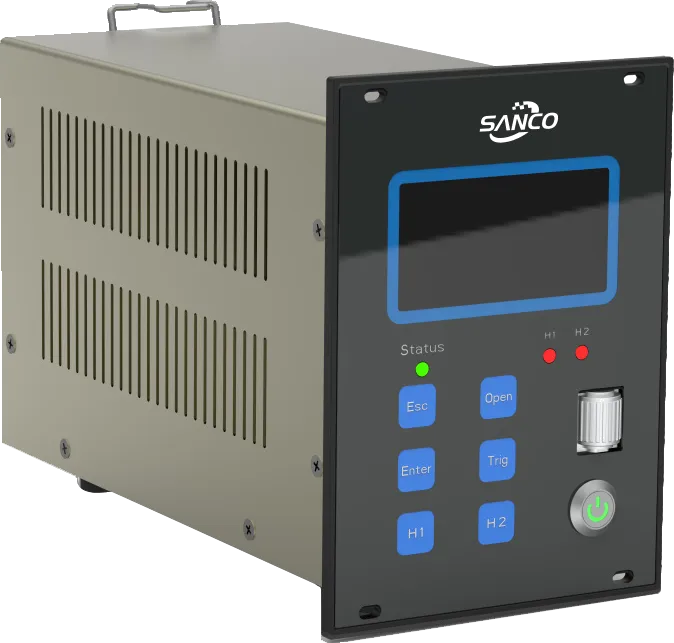
The CANP 5G Pump is a precision material supply and pressure control unit used to feed dispensing valves and coating systems with consistent fluid pressure. It is particularly suited for:
- High-viscosity fluids that require positive pressure feed
- Continuous production where cartridge changes would interrupt the line
- Large-volume dispensing applications (potting, encapsulation, structural bonding)
- Systems requiring precise pressure stability to maintain consistent flow rate
It integrates directly with SANCO's dispensing and potting machines as the upstream fluid supply system.
→ View CANP 5G PumpSANCO machines use a proprietary graphical programming interface that allows path creation via:
- Visual teaching — directly click dispensing points on a live camera image of the PCB
- Coordinate import — import X/Y coordinates from Gerber, CSV, or CAD export files
- SPI/AOI integration — receive dispensing coordinates automatically from upstream inspection systems (optional)
Programs can be stored, recalled, and modified on the machine's touchscreen HMI. Support for MES integration and barcode-triggered recipe selection is available as an option.
Selective conformal coating means the coating material is applied only to the specified areas of the PCB — protecting circuits, traces, and components — while precisely avoiding connectors, test points, heat sinks, and other keep-out zones.
Compared to blanket spray coating, selective coating offers:
- No masking required — saving labour, time, and masking material cost
- Consistent coating thickness and edge definition
- Reduced overspray, rework, and scrap rates
- Programmable coating paths that can be quickly changed per product
- Traceability — every board's coating program can be logged
For modern electronics with dense keep-out areas and frequent product changeovers, selective coating is the production standard.
Three-Axial Coating Machine — moves in X, Y, and Z axes. Suitable for most flat PCBs with standard coating patterns. The valve angle is fixed, which works well for uniform spraying across flat surfaces.
Four-Axial Coating Machine — adds a rotational (R) Axial to the valve head. This allows the spray valve to rotate and tilt, enabling:
- Coating at controlled angles around tall components
- Edge coating on PCB perimeters without overspray
- Tighter keep-out zone avoidance on complex board layouts
- More uniform coverage on boards with significant component height variation
The Four-Axial is recommended for automotive PCBs, complex aerospace boards, and high-component-density designs where three-Axial motion cannot achieve the required coverage without masking.
→ View Four-Axial MachineSANCO offers six coating valve types for different film profiles and material requirements:
- G-300HP High-Pressure Valve — for high-viscosity coatings requiring consistent spray under elevated pressure
- G-500HP Diaphragm Valve — gentle, pulse-free flow for sensitive coatings and delicate substrates
- BF-028 Film Spray Valve — produces a flat fan pattern for fast, uniform film deposition over wide areas
- SF-073 Sector Spray Valve — sector-shaped spray pattern for area coverage with controlled edges
- G-420A Precision Striker Valve — narrow beam for precise edge coating and tight keep-out avoidance
- LF-001 Conical Spray Valve — circular spray pattern, ideal for conformal coating with even radial distribution
Selection depends on coating material viscosity, required film width, deposition speed, and edge definition requirements. SANCO provides valve recommendations based on your material data sheet and coating specification.
SANCO coating machines can achieve wet film thickness in the range of 20μm to 500μm depending on valve selection, coating material, spray parameters, and the number of passes.
Typical conformal coating specifications (IPC-A-610 / IPC-CC-830) require dry film thickness of 25–75μm for acrylic and polyurethane coatings. SANCO systems are tuned to meet these standards while also supporting thicker potting-style applications.
Thickness consistency across the board is controlled by:
- Stable valve flow rate calibration
- Controlled motion speed and spray height
- Temperature regulation of coating material (where required)
- Optional inline wet film thickness measurement
Yes. SANCO provides complete double-sided coating line solutions. The typical configuration includes:
- Side 1: Elevator In → Conveyor → Coating Machine → UV Conveyor → Curing Oven
- PCB Flipper — automatically flips the board to expose Side 2
- Side 2: Conveyor → Coating Machine → UV Conveyor → Curing Oven → Elevator Out
The PCB Flipper integrates seamlessly in the line and eliminates manual board handling between sides. SANCO has validated double-sided coating lines for automotive ECU, industrial control boards, and consumer electronics applications.
→ View Double-Side SolutionSANCO coating machines are compatible with all major conformal coating chemistries:
- Acrylic (AR) — most common, fast UV or solvent cure, easy rework
- Polyurethane (UR) — excellent moisture and chemical resistance
- Silicone (SR) — wide temperature range, flexible film
- Epoxy (ER) — hard, chemically resistant, difficult to rework
- UV-cure coatings — fast inline curing, reducing oven footprint
- Parylene — requires separate CVD process, not inline applicable
Valve selection and spray parameters are configured for each material type. SANCO recommends providing a material technical data sheet to confirm compatibility before process validation.
Keep-out zones are defined in the SANCO coating machine's software as exclusion polygons or rectangles that the motion controller automatically avoids during the coating path calculation. For a new PCB:
- Load a top-view image or import Gerber/CAD data of the board
- Draw keep-out areas directly on the board image in the GUI
- Define the coating area boundary and spray parameters per zone
- Save as a product program — takes 15–60 minutes for a new board depending on complexity
Once saved, programs are recalled instantly via product ID or barcode scan. Changeover between products takes under 2 minutes in normal production. Vision correction automatically adjusts for PCB placement variation on each cycle.
SANCO offers four curing methods, each suited to different materials and production requirements:
- UV Curing — mercury UV lamp, fast cure (seconds), ideal for UV-acrylic conformal coatings. Lower equipment cost, standard production workhorse.
- UV-LED Curing — LED-based UV, energy efficient, long lamp life, no warm-up time, narrow wavelength targeting. Preferred for heat-sensitive substrates.
- IR Curing Oven — infrared heat, suitable for solvent-based and moisture-cure coatings, and adhesive curing. Controlled temperature zones.
- Hot Air / Thermal Reflow Oven — convection heat, for thermal cure adhesives, potting compounds, and solder reflow processes. Precise multi-zone temperature profiles.
Material supplier datasheet will specify curing method and energy/temperature requirements. SANCO will confirm compatibility and set up the correct oven configuration before delivery.
Yes — inline integration is the standard configuration for SANCO production lines. The curing oven connects directly after the coating machine via a UV Conveyor or standard conveyor, creating a continuous process flow:
- Coating machine applies the conformal coating
- UV Conveyor transports the board under a UV lamp for rapid surface tack-off (prevents dripping)
- Curing oven provides full through-cure at controlled speed and temperature
- Vertical Buffer or Cooling Conveyor conditions the board before the next process or unloading
This eliminates manual board handling between coating and curing, maintains consistent curing time per board, and enables continuous production at rated takt time.
The SANCO Vertical Oven is a space-saving, high-capacity curing oven where PCBs travel vertically through a serpentine path inside the oven chamber. Key advantages include:
- Compact footprint — provides long effective curing tunnel length (equivalent to 4–8 meters) in a small floor area
- High throughput — multiple boards in the oven simultaneously for continuous production
- Precise temperature control — multiple independent heating zones with PID regulation
- Inline integration — compatible with SANCO's standard conveyor interface
It is particularly suitable for thermal cure adhesives and coatings requiring extended dwell time at elevated temperature — common in automotive, industrial, and new energy applications.
→ View Vertical OvenYes. SANCO curing ovens provide fully adjustable parameters that can be saved as product recipes and recalled per board type:
- Conveyor speed — controls dwell time in the curing zone (seconds to minutes)
- UV intensity / lamp power — adjustable for UV ovens to match material energy requirements (mJ/cm²)
- Temperature zones — each zone independently controlled via PID for thermal ovens
- Air flow — fume extraction and airflow settings per material type
In a connected production line, recipe changes can be triggered automatically by barcode scan at board entry, enabling mixed-model production without manual parameter adjustment.
Curing of solvent-based conformal coatings and some adhesives produces volatile organic compounds (VOCs) that require controlled extraction. SANCO ovens include:
- Built-in exhaust ports for customer-supplied external extraction ducting
- Airflow management inside the oven to direct fumes to extraction points
- Optional activated carbon filtration for environments without external ducting
Customer facility must provide an exhaust extraction system meeting local EHS regulations. Duct connection size and extraction volume requirements are specified in the oven technical documentation. SANCO can advise on extraction system design if needed.
The Vertical Cooling Buffer Conveyor is placed after the curing oven to safely reduce board temperature before downstream handling, inspection, or packaging. It is needed when:
- Boards exiting the oven are too hot to handle or stack without damage
- Downstream equipment (AOI, labelling, packaging) has operating temperature limits
- Production speed exceeds downstream processing speed — the buffer stores boards and releases them at a controlled rate
It also acts as a line buffer, decoupling the curing process from downstream operations and preventing line stoppages from propagating upstream. Vertical design minimizes floor footprint.
→ View Cooling BufferA typical SANCO online PCBA conformal coating line with return conveyor includes:
- Elevator (In) — magazine-fed board loader, automatically feeds PCBs to the line
- Conveyor — transport between stations at controlled speed
- Coating Machine — Three or Four-Axial selective coating
- UV Conveyor — rapid surface cure immediately after coating to prevent drips
- Curing Oven — UV, IR, or thermal full cure
- PCB Flipper (for double-sided lines) — automatically flips board for Side 2 coating
- Return Conveyor — returns empty magazines or coated boards to the front of the line
- Elevator (Out) — stacks completed boards into magazines for downstream handling
This configuration enables fully automated continuous production — operator loads magazines, system runs unattended, operator collects completed boards. Takt times vary by board size and coating area; typical range is 30–120 seconds per board.
→ View Line SolutionsYes, in most cases. SANCO equipment uses standard SMEMA (Surface Mount Equipment Manufacturers Association) electrical interface for board-available and board-pass signals, which is the industry standard for SMT and PCB automation equipment. This enables handshaking with equipment from most other manufacturers.
For mechanical integration, SANCO can customize conveyor rail width, height, and speed to match your existing line parameters. For MES or data integration, standard protocols (OPC-UA, MQTT, Modbus, or custom) can be implemented.
Provide details of your existing equipment interface specifications during the inquiry stage and SANCO will confirm compatibility and any required adaptations.
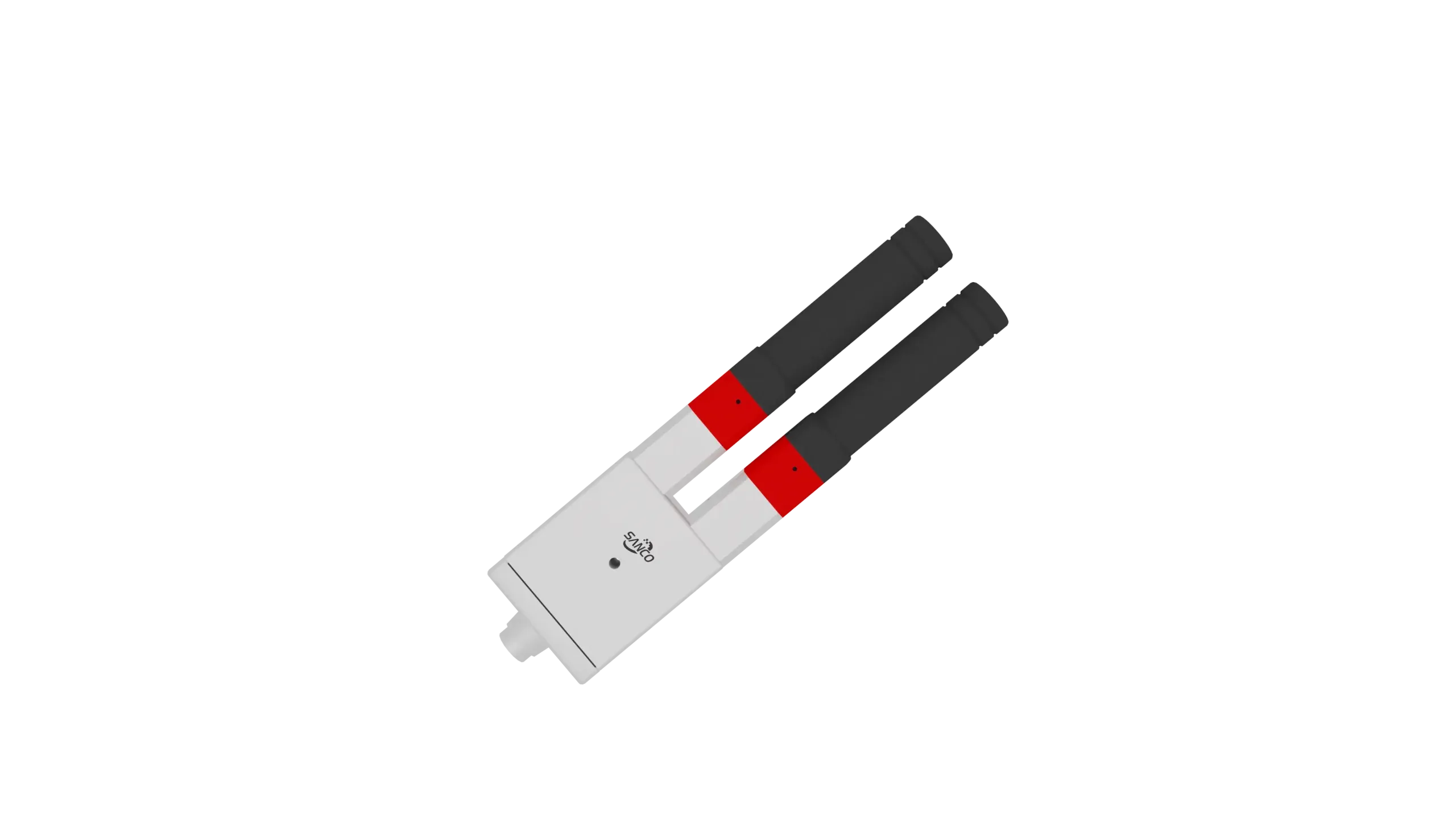
The SANCO PCB Flipper is an inline peripheral that automatically rotates PCBs 180° (front-to-back flip) without manual operator intervention. It is used in double-sided coating and dispensing lines to process both sides of a PCB in a single continuous pass.
Operation sequence:
- Board arrives from Side 1 curing oven via conveyor
- Flipper receives board, grips it on the edges
- Rotates 180° using servo-driven mechanism
- Board exits onto the downstream conveyor with Side 2 facing up
- Side 2 proceeds to the coating machine for processing
The flipper supports a range of board sizes and thicknesses. Edge grip design avoids contact with component surfaces. Flip cycle time is typically 3–6 seconds, not significantly impacting overall takt time.
→ View PCB FlipperThe NG/OK Conveyor is a sorting conveyor placed after inspection (AOI or manual inspection) that automatically routes boards to one of two output lanes:
- OK lane — boards that passed inspection proceed to the next process or packaging
- NG lane — boards flagged as defective are diverted for rework or rejection, without stopping the production line
Sorting is triggered by a signal from the AOI system or operator input. This prevents defective boards from mixing with good boards downstream, maintains traceability, and allows the production line to continue running during NG board handling.
→ View NG/OK ConveyorYes. SANCO machines can be integrated with Manufacturing Execution Systems (MES) for production traceability and data collection. Available integration features include:
- Barcode / QR code scanning — automatically reads board ID at entry, triggers matching process recipe
- Process data logging — records coating program, parameters, timestamps, and results per board
- MES data upload — transmits production records to MES via Ethernet/TCP-IP, OPC-UA, or custom API
- Alarm and status monitoring — real-time machine status can be displayed on factory dashboards
MES integration requirements should be specified during the solution design phase. SANCO's software team can develop custom communication modules for specific MES platforms used in your facility.
Installation timeline depends on line complexity, facility preparation, and customer readiness. Typical timelines:
- Single machine (standalone) — 1–3 days for mechanical installation, connection, and commissioning
- 3–5 machine inline system — 3–7 days for full installation, alignment, and process validation
- Full automated line (7+ stations) — 7–14 days including integration testing, MES connection, and operator training
SANCO pre-assembles and tests the complete line in our factory before shipment. This significantly reduces on-site commissioning time. Operator training is included in the installation service — typically 1–2 days covering machine operation, programming, maintenance, and troubleshooting.
Yes. SANCO has in-house mechanical design, software, and process engineering capabilities to accommodate non-standard requirements including:
- Oversized or unusually shaped PCBs and substrates
- Special fixture and carrier designs for oddly shaped components
- Custom working area dimensions beyond standard machine specifications
- Non-standard conveyor rail configurations (e.g., bottom-support transport for large flexible boards)
- Multi-material or multi-process machines (dispensing + coating in one platform)
- Integration with customer-specific robotic or handling systems
Share your PCB dimensions, component layout, process requirements, and production volume with SANCO's engineering team. We will evaluate feasibility and provide a tailored solution proposal.
SANCO's standard delivery process includes factory acceptance testing (FAT) using the customer's actual materials and sample boards whenever possible. The validation process includes:
- Material testing — characterize fluid viscosity, pot life, cure speed, and flow behavior
- Valve selection and tuning — run trials with different valve configurations to confirm output stability
- Motion path programming — create and test coating/dispensing programs on real sample PCBs
- Process parameter optimization — set and lock speed, pressure, temperature, and spray height parameters
- Curing verification — confirm cure results meet specification using cross-section, adhesion, and coating integrity tests
- FAT run — run minimum 20–50 boards in production conditions and document results
All validated parameters are documented and shipped with the machine. This eliminates most commissioning uncertainty at the customer site.
Yes. SANCO's motion control software, HMI interface, valve control logic, vision processing, and MES communication modules are developed in-house by SANCO's software engineering team. This means:
- No dependency on third-party software vendors for bug fixes or updates
- SANCO can implement custom software features, protocol integrations, and UI modifications per customer request
- Software version control and update management is handled directly by SANCO
- Remote diagnostics and software support can be provided securely by SANCO engineers
Customers receive full documentation of the software interface and communication protocols. Source code is not provided as standard but special arrangements can be discussed for strategic customers.
SANCO equipment holds the following certifications relevant to electronics manufacturing:
- ISO 9001 — Quality Management System certification for SANCO's manufacturing and engineering processes
- CE (LVD) — Low Voltage Directive compliance for electrical safety (LM Series)
- CE (MD) — Machinery Directive compliance for mechanical safety (LM Series, DS Series)
- CE (UV Curing Oven) — CE certification for UV mercury curing equipment
- CE (Pump) — CE certification for material delivery pump
CE certification supports SANCO equipment sale into EU markets and is widely accepted in other international markets. Certification documents are provided with each machine delivery. Other market-specific certifications can be discussed based on destination country requirements.
Yes. SANCO welcomes process evaluation before equipment purchase. Options include:
- Sample testing in SANCO's application lab — send your PCBs and materials to our factory; SANCO engineers run process trials and report results (coating coverage, dispensing accuracy, curing results, cycle time)
- Video documentation — SANCO records the process trial and shares footage showing machine operation with your product
- Factory visit — visit SANCO's facility to observe sample testing in person and discuss the process with our engineers directly
Sample testing helps both sides confirm process feasibility, identify any special requirements, and establish accurate specifications for the equipment order. Contact our sales team to arrange sample testing.
SANCO provides a standard 12-month warranty covering defects in materials and workmanship for all equipment from the date of delivery and acceptance. During the warranty period:
- Defective parts are replaced or repaired at no charge
- Remote technical support is provided for troubleshooting and software issues
- On-site support can be arranged for issues that cannot be resolved remotely (travel costs may apply for international customers)
Warranty does not cover consumable parts (valve needles, seals, filters), damage from misuse, unauthorized modification, or normal wear. Extended warranty and service contracts beyond 12 months are available — ask your SANCO sales contact for details.
SANCO supports international customers through multiple channels:
- Remote diagnostics — secure remote access to machine HMI for real-time troubleshooting by SANCO engineers
- Video call support — scheduled or emergency video calls with SANCO technical team for guided troubleshooting
- Email and messaging — documented technical support with response within 24 hours on business days
- Spare parts shipping — DHL/FedEx express shipping of replacement parts worldwide, typically 3–7 business days delivery
- On-site visits — SANCO engineers can travel to customer sites for complex issues, major maintenance, or line expansion projects
Customers are provided with full electrical schematics, pneumatic diagrams, parts lists, and maintenance manuals in English to support local maintenance capability.
SANCO recommends maintaining a local stock of the following consumable and wear parts for continuous production capability:
- Valve needle tips and seat seals (consumption rate depends on material abrasiveness)
- O-rings and sealing kits for the dispensing valve
- UV lamp (if using UV curing oven) — typical lifespan 1,000–2,000 hours
- Conveyor belts and drive belts
- Spray nozzles and filters for coating valves
- Fuses and basic electrical components
SANCO provides a recommended spare parts list with each machine delivery, indicating estimated change intervals based on standard production hours. A starter spare parts kit can be included with the initial machine order — ask your sales contact to include this in the quotation.
SANCO exports to 50+ countries worldwide. Equipment is shipped from our factory in China via sea freight (for large systems) or air freight (for smaller machines or urgent delivery). Standard process:
- Manufacturing lead time — 4–10 weeks depending on machine type and customization level
- Sea freight — 2–5 weeks transit depending on destination port
- Air freight — 5–10 business days to most destinations
SANCO packages equipment in custom wooden crates with foam protection, desiccant, and anti-vibration measures for safe international transport. Export documentation, CE declarations, packing lists, and customs HS codes are provided. SANCO can arrange door-to-door shipping or work with your freight forwarder.
To help SANCO provide an accurate solution recommendation and quotation, please prepare the following information:
- Product details — PCB dimensions, component height range, weight
- Material information — material type, brand/model, viscosity, TDS (technical data sheet) if available
- Process requirements — coating areas, keep-out zones, dispensing patterns (photos or Gerber files help)
- Production requirements — daily volume, takt time target, single or double-sided
- Automation level — fully automatic, semi-automatic, or standalone; need for MES integration
- Industry and application — helps SANCO apply relevant experience to your case
Even a partial brief is enough to start the conversation. Contact SANCO via email at sales@sancofd.com or by phone at +86 13417510586 and our application engineers will guide you through the rest.
→ Contact SANCO Now